S
Sagar HebbalePublished on April 15, 2026
20 min read
How to Evaluate a Software Development Company: A Comprehensive Guide
Follow our checklist to choose the right software development partner for your needs.
Follow our checklist to choose the right software development partner for your needs.
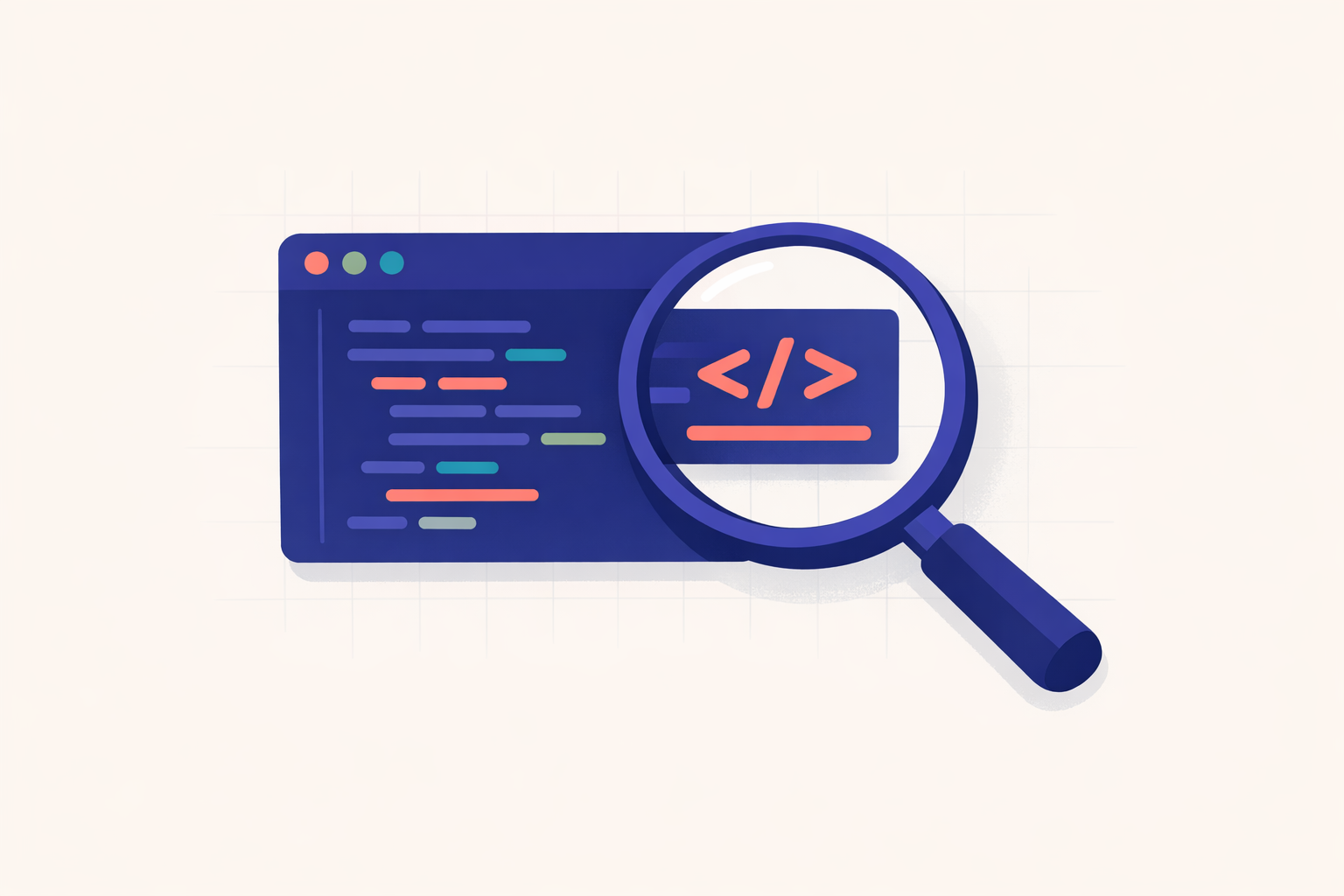
A stylized magnifying glass examining software code.
Evaluating a software development company is critical when deciding to outsource your software needs. This evaluation process ensures that the vendor's capabilities and approach align with your project's objectives and your company's culture. In the expansive field of software development, finding the right partner can feel overwhelming. Thus, as you seek to select a software development company, consider the steps and factors outlined in this guide.
The Steps of Evaluation:
Define Your Needs:
Begin by creating a comprehensive outline of your project, emphasizing desired functionality, performance, user experience, and integration with existing systems. These details will enable potential vendors to effectively tailor their services to your unique requirements.
Assess the Company’s Expertise:
A thorough evaluation involves examining the vendor's proficiency in the technologies you require. Customer testimonials and references can serve as valuable indicators of their work quality and successful project implementations.
Review Their Portfolio:
The nature and quality of a company’s previous work reveal much about their capabilities and style. Pay particular attention to completed projects that are similar to yours to assess their creativity, technical expertise, and attention to detail.
Evaluate Communication:
Open and consistent communication is often a key factor in the successful completion of a project. Assess how effectively the company listens to your needs, understands your requirements, and provides timely updates.
Understand Pricing Models:
Gaining clarity on their pricing models is essential before finalizing your outsourcing decision. This understanding helps you navigate the financial aspects of your engagement with the selected software development company.
In the upcoming sections, we will explore each step of evaluating a software development company in greater detail. We will also address several frequently asked questions to enhance your understanding.
In conclusion, knowing how to evaluate a software development company is essential for outsourcing software development. This knowledge empowers you to make informed decisions, ensuring successful and seamless project execution.
Finding the ideal software development partner requires careful assessment. This blog aims to assist you in that process. Let’s begin guiding you toward an informed selection.
To effectively evaluate a software development company, it is essential to define your needs at the outset. A clear understanding of your requirements will empower you to select a software development company that aligns with your specific goals and expectations. Here are several key aspects to consider:
What objectives do you aim to achieve with your software? Identifying your business goals is the first step in this process. This involves specifying the purpose of the software, the desired functionality, performance criteria, user experience, and potential integrations with existing systems.
Technical requirements encompass several aspects, including the software's platform (is it a mobile app, web app, or both?), the technology stack to be employed (do you require .NET, Java, Python, React, etc.), as well as design and user interface specifications. Clearly defining these requirements will enable you to accurately assess a vendor's expertise.
Evaluate the resources you are willing to allocate for the project. If your in-house team will collaborate with an outsourced team, assess the skills and time they can commit.
Every project faces limitations. Do you have a strict deadline, a fixed budget, or specific data security requirements? Clearly defining these constraints will help you eliminate incompatible vendors early in your evaluation process.
What are your expectations regarding communication, project management, and progress updates? Clearly articulated expectations will foster smoother collaborations with the selected software development company.
After defining your needs, you can further evaluate software development companies. Your requirements list serves as a valuable tool for assessing vendors' expertise and reviewing their portfolios. It will also assist you in examining communication practices, understanding their pricing models and cultural fit, and identifying any potential red flags.
In conclusion, defining your needs is a crucial step in the process of selecting a software development company. It lays a strong foundation for the subsequent evaluation steps, ensuring that your decision is informed and fruitful.
Before you select a software development company, it's essential to follow an outsource development checklist to keep your selection process organized and focused. The following points outline a buyer's guide for vendor evaluation, helping you strategically partner with a software development company that aligns with both your project's objectives and your company's culture.
Clearly defining your needs is fundamental to the selection process. A robust understanding of your software's expected functionality, essential integrations, performance standards, and user experience will enable you to quantify your expectations and make a more objective selection.
Evaluating the expertise of a software development firm is a vital component of the vendor assessment process. This evaluation will determine whether the company can meet your project's technical and conceptual requirements.
Reviewing the portfolio of a software development company provides valuable insights into their style, competence, and experience with projects similar to yours.
Effective communication is critical to successful project delivery. Evaluating the communication skills of potential vendors before making a selection is essential.
Grasping the pricing models of prospective software development firms is crucial prior to making a decision. This understanding ensures transparency and helps to avoid unexpected financial surprises during the project.
Considering whether a potential software development company meshes well with your corporate culture and prioritizes project confidentiality is a concern often overlooked by stakeholders.
Assessing a company's scalability helps you determine whether it can effectively manage project demands as your business grows.
Be vigilant for potential red flags during your evaluation of a software development company.
What should I consider while choosing a software outsourcing company?
Key evaluation points include understanding your needs, assessing the vendor’s expertise, reviewing their portfolio, evaluating communication practices, examining pricing models, appraising cultural fit and security, verifying scalability, and identifying red flags as part of your outsource development checklist when selecting a software development company.
Why is it essential to assess the expertise of a software development company?
Assessing expertise is crucial as it ensures that your vision for the software aligns with the technical capabilities and understanding of the company. This alignment will significantly impact the vendor's ability to fulfill your project requirements effectively.
What does reviewing a software vendor's portfolio entail?
Reviewing a portfolio involves analyzing their past work, including the projects they’ve completed, the quality of their output, their creativity, attention to detail, and their preparedness to handle a project like yours.
When evaluating a software development company, reviewing their portfolio and understanding their pricing models are crucial steps in the process. These aspects play a significant role in helping you choose a software development company that not only aligns with your project requirements but also fits within your budgetary constraints.
A company's portfolio serves as a blueprint of its expertise, style, and quality of work. It offers valuable insights into the company's capability to handle projects similar to yours. Therefore, it is essential to:
Deciphering the financial aspects of your engagement is a vital part of your vendor evaluation. Here are some key considerations:
In conclusion, reviewing a company's portfolio provides insight into their past work and technical capabilities, while understanding their pricing models ensures that you are making a wise investment. Both of these factors are essential in guiding you toward an informed decision when selecting a software development company.
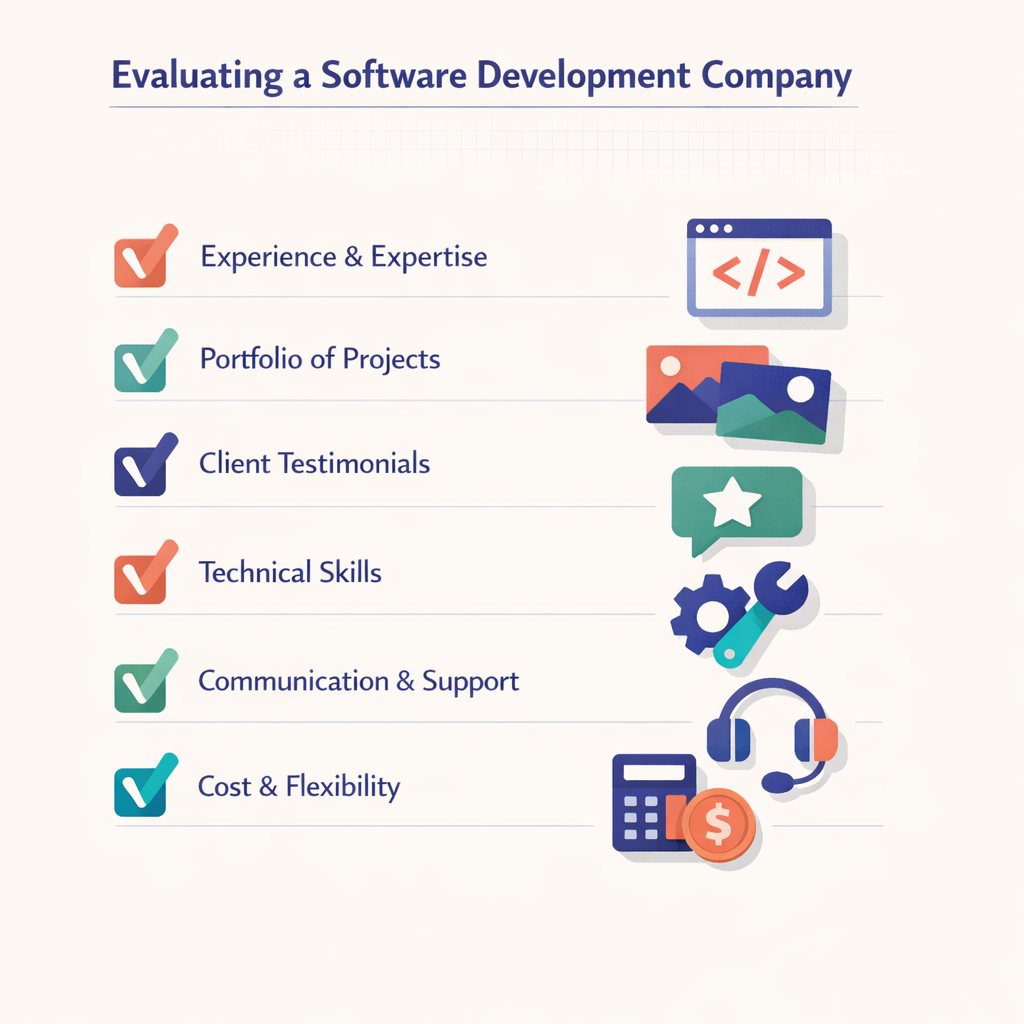 An illustrated evaluation checklist for software development companies.
While technical proficiency is undoubtedly important when evaluating a software development company, effective communication and cultural alignment are equally essential.
Effective communication extends beyond merely exchanging information; it is about forging a strong partnership that is critical for project success. Whether it involves conveying complex software specifications or addressing potential issues, robust communication ensures transparency and fosters mutual understanding.
When selecting a software development company, consider the following communication-related factors:
| Aspect | Description |
|---|---|
| Openness and Clarity | The company should communicate ideas and project details clearly, avoiding obscure technical jargon. |
| Response Time | Timely responses to your inquiries and concerns demonstrate respect for your time and commitment to your project. |
| Availability | The company should clearly define how and when it will communicate with you. Ensure that these timelines align with yours to prevent delays and misunderstandings. |
Cultural fit encompasses more than shared values; it facilitates smoother interactions and collaboration. It can significantly influence project implementation and the overall experience of working with an external team.
A well-aligned culture can be observed through:
Creating an outsourcing development checklist can provide a structured method for evaluating these attributes.
In conclusion, effectively evaluating a software development company requires that equal attention is given to communication and cultural fit, alongside technical and financial considerations. Always remember that successful software development stems from a collaborative partnership rather than a mere transactional relationship. Therefore, choose a software development company that will partner with you, not just work for you.
In the journey to select a software development company, an outsourcing development checklist will undoubtedly serve as your best ally. It can help streamline the inherently complex process of vendor evaluation. Among the various criteria to assess, special attention should be given to security and scalability. These are essential features for upholding the integrity, capability, and future growth potential of your software solution.
Evaluating the security proficiency of a software development company is critical for ensuring the protection of your data and that of your customers. A company that prioritizes security will implement measures such as routine audits, encryption techniques, frequent updates, and vulnerability checks. They should also demonstrate expertise in enforcing strict security protocols and adhering to compliance standards.
Here are some questions to guide your evaluation:
Scalability is a vital attribute when evaluating a software development company. A highly scalable system can efficiently manage increased workloads by dynamically allocating resources, ensuring that your software can grow alongside your business. This capability allows accommodation of larger user bases and varied functionalities without compromising performance.
To assess the scalability of a prospective company, consider the following aspects:
| Evaluation Aspect | Questions to Consider |
|---|---|
| Experience with scalable solutions | Inquire about their experience in building scalable solutions. |
| Scalability testing methods | Investigate the scalability testing methods they employ. |
| Use of cloud technologies | Determine if they utilize cloud technologies, as these are integral to modern scalable systems. |
In conclusion, security and scalability are pivotal considerations when evaluating a software development company. Prioritizing these factors will help ensure you select a reliable and future-proof partner. As you proceed with your vendor evaluation, keep these crucial criteria at the forefront of your decision-making process to best align with your business needs.
Evaluating a software development company for a potential partnership necessitates a meticulous approach. While it's important to consider their strengths and expertise, it is equally crucial to be vigilant for potential red flags that may indicate problematic areas. Identifying these warning signs early can help you avoid making a regrettable decision. Keep the following red flags in mind as part of your outsourced development checklist:
Insufficient Understanding of Your Industry.
Does the company exhibit a clear understanding of your business model, target audience, and the intricacies of your industry? Although not every software development firm will specialize in your particular sector, they should be adaptable and eager to learn. A lack of understanding could result in misaligned software solutions.
Limited or Irrelevant Portfolio.
A sparse portfolio or absence of relevant experience can be alarming when assessing a software development company. Seek firms that present a robust portfolio featuring a variety of complex projects.
Poor Communication.
Unclear responses, unanswered emails, or delayed replies are indicators of poor communication practices. Effective collaboration relies on clear and timely communication; this red flag should not be overlooked.
Inflexible Pricing Models.
Rigidity in pricing structures suggests a reluctance to tailor their services to accommodate your budget and requirements. Reputable vendors will often collaborate with you to design an engagement framework that aligns with your financial parameters.
Disregard for Security Protocols.
If a software development company fails to prioritize robust security measures during development, this raises a significant red flag. Ignoring security can jeopardize your software and sensitive data.
Conducting a thorough evaluation of a software development company before making a final selection is an essential step that is often overlooked. Utilizing an outsourcing development checklist can help ensure a comprehensive vendor evaluation tailored to your specific needs. Here is a concise summary of the key steps to consider in your evaluation journey:
Define Your Needs: Clearly outline your project's scope, including its desired functionality, performance, user experience, and necessary integrations.
Assess Expertise: Review the technical proficiency of potential software developers, focusing on their knowledge and experience with the technologies critical to your project.
Review Their Portfolio: Evaluate the company’s capabilities and style by examining their previous projects, paying particular attention to those similar to yours.
Evaluate Communication:
Understand Pricing Models: Ensure you are aware of how they charge for their services (e.g., fixed-price, time & materials, or dedicated team models) before selecting a software development company.
Cultural Fit: Assess whether the company’s working style, values, and communication approach align with yours, as this can significantly contribute to a smooth and stress-free collaboration.
Consider Security: Confirm that the software development company prioritizes data security and complies with relevant security standards.
Check for Scalability: Ensure that the company can accommodate growth and demonstrate flexibility in response to changes in your business needs.
Spot Red Flags: Remain vigilant for warning signs that may indicate potential issues in the partnership.
Remember, selecting a reputable software development company is not a decision to rush. A hasty choice can result in wasted time, money, and resources, so take the time to utilize your outsourcing development checklist and make an informed decision.
Finally, trust in your ability to evaluate software development companies effectively. Armed with a comprehensive evaluation checklist and a clear understanding of the evaluation steps, vendor profiling, and potential red flags, you are well-equipped to make the right choice. Happy evaluating!
What is the importance of evaluating a software development company?
Carefully evaluating a software development company is crucial to ensure they can meet your specific needs, demonstrate reliability, and provide the necessary skills, expertise, and cultural fit.
What are red flags when evaluating a software development company?
Warning signs may include unclear communication, a limited or outdated portfolio, reluctance to provide references, lack of pricing transparency, or a misalignment of company culture.
Why is it important to understand the pricing models of a software development company?
Understanding pricing models helps avoid hidden costs, ensures fair budget allocation, and facilitates effective comparisons between different software development companies.
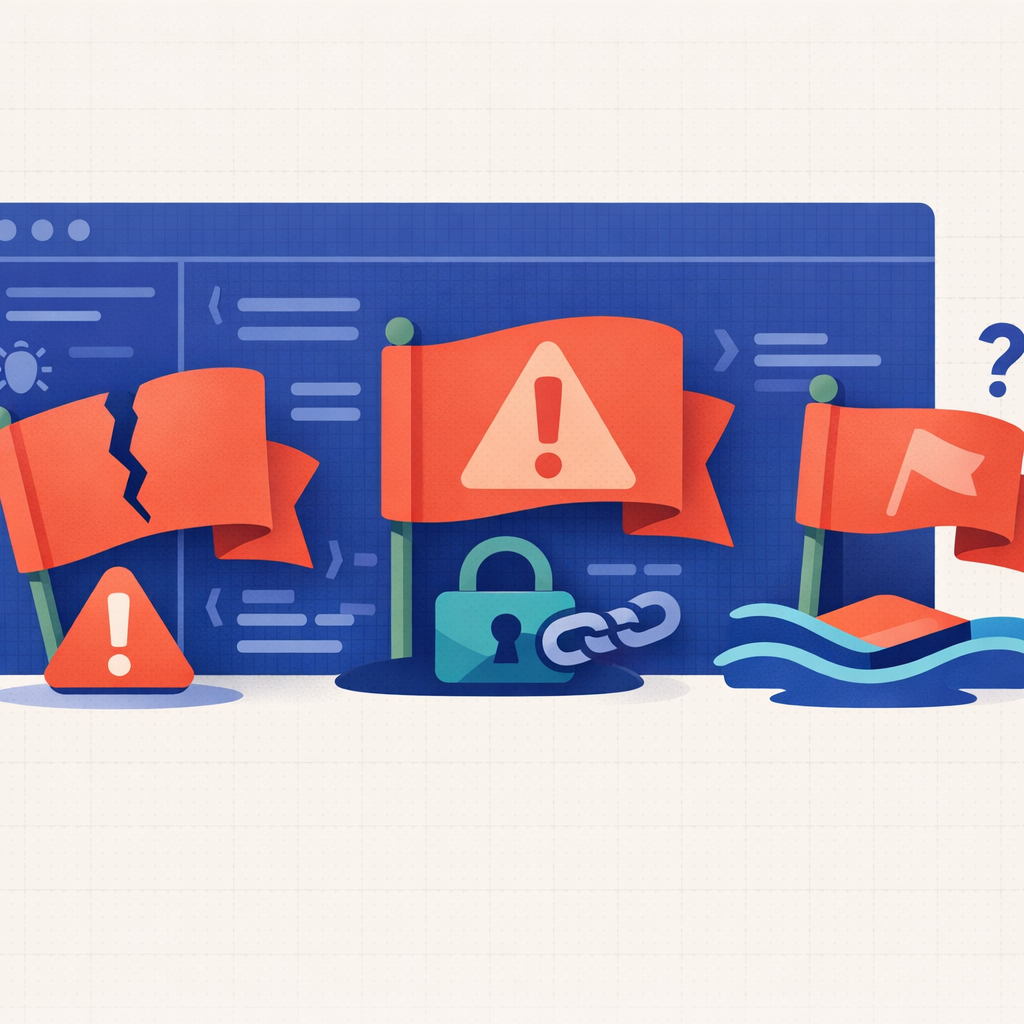 Illustrated 'Red Flags' over a software coding pattern.
As you evaluate a software development company, numerous questions may arise. We have compiled a list of frequently asked questions to guide you through your vendor evaluation process and help you select a software development company that aligns with your needs.
Gaining clarity on your needs is the first step in selecting a software development company. Key factors to consider include the functionality, performance, user experience, and how the application integrates with your existing systems. Additionally, you should contemplate:
Understanding these elements will enable you to effectively communicate them during discussions with potential partners.
Evaluating a company's expertise centers on their proficiency with the technologies you require. Pertinent questions to ask include:
Gaining insight into the company's technical competencies can help mitigate potential challenges during the development process.
Throughout your evaluation, remain vigilant for red flags. Indicators may include:
Remember, the least expensive option is not always the best choice. Software development is an investment, and cutting corners may lead to compromised quality. Discussing your budget constraints openly with prospective companies can help avoid miscommunications and mismatched expectations.
Cultural fit is vital for establishing a successful partnership. Companies that align with your values, work ethic, and communication style are more likely to foster smooth collaboration. Consider their corporate culture, management style, and operating principles before making a decision.
Keep these FAQs in mind as part of your outsourced development checklist. The more thorough your vendor evaluation process, the better your chances of selecting a software development company that will effectively meet your project's unique requirements. Be diligent, patient, and ensure that your decision is based on well-researched information.