S
Suvam SwainPublished on April 15, 2026
18 min read
Cloud-Native Development Guide: Essential Practices and Insights
Master cloud native technology with key principles, best practices, and migration strategies.
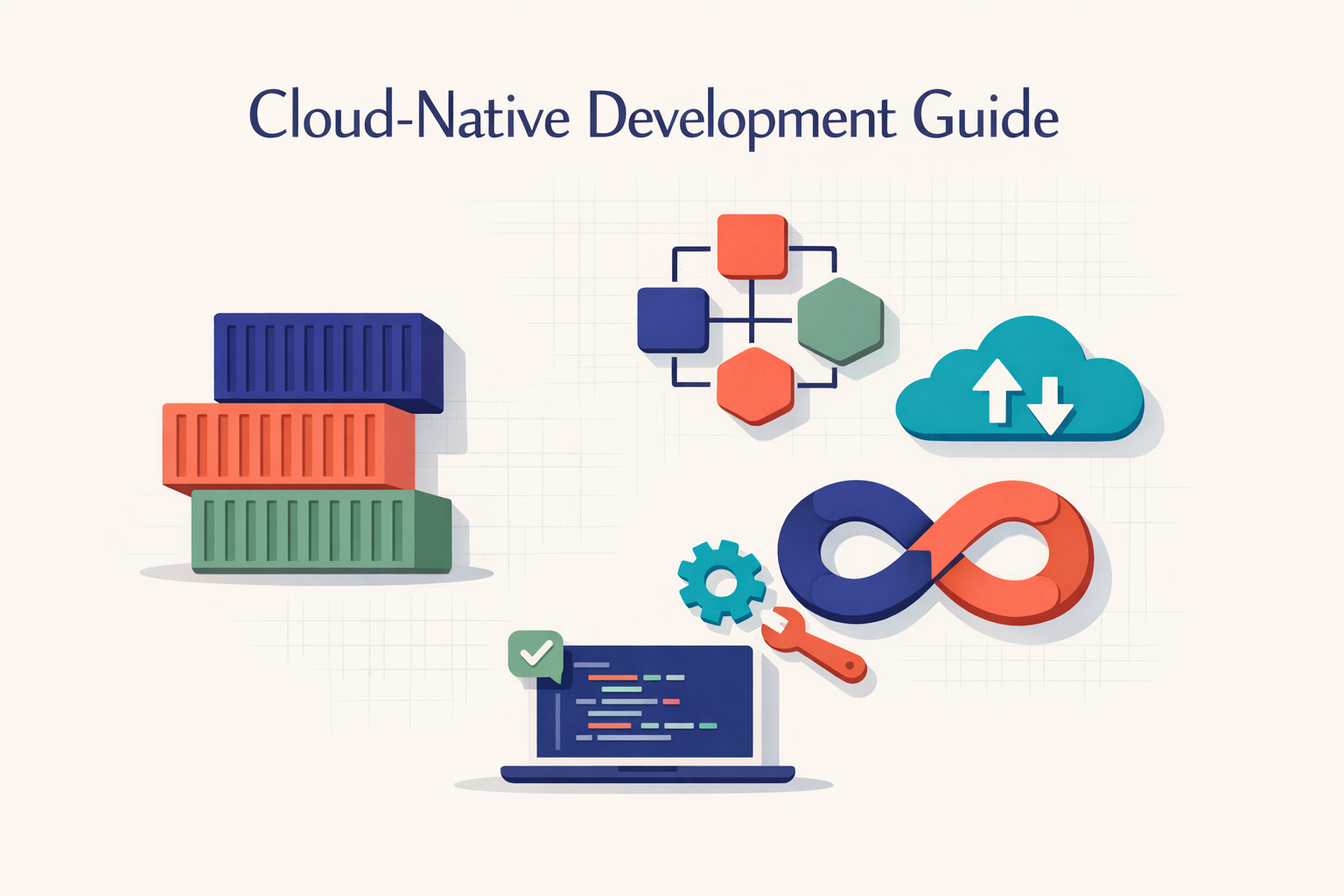
Master cloud native technology with key principles, best practices, and migration strategies.
Hero image of the Cloud-Native Development Guide blog post featuring flat geometric interpretation of cloud native components.
In today's highly competitive digital landscape, organizations are continuously seeking innovative strategies to deliver high-quality, real-time responsive applications. One of the most prominent approaches that has emerged is cloud-native application development. This guide aims to clarify the fundamentals of this contemporary methodology, outlining its core principles and best practices.
Cloud-native application development provides a pioneering framework for building and running applications that leverage the capabilities of cloud computing delivery models. Enterprises opt for cloud-native solutions to enhance scalability, resilience, and flexibility. This approach empowers businesses to adapt to ever-changing market demands and deliver robust applications across various types of cloud environments, including public, private, and hybrid.
This guide delves into the essence of cloud-native development, which is anchored by three key principles:
Additionally, the Cloud Native Architecture, a cornerstone of this process, employs microservices patterns and facilitates the flexible and efficient deployment and scaling of applications. Within this guide, we explore various architectural patterns, scalability solutions, resilience strategies, Continuous Integration and Continuous Delivery (CI/CD), observability, and security considerations.
In summary, this cloud-native development guide is designed to be your comprehensive resource for understanding the concepts, best practices, and insights necessary for a successful transition to cloud-native application development.
Stay with us as we unpack the multifaceted elements of the cloud-native journey, offering a roadmap for businesses to confidently seize the opportunities presented by this transformative approach.
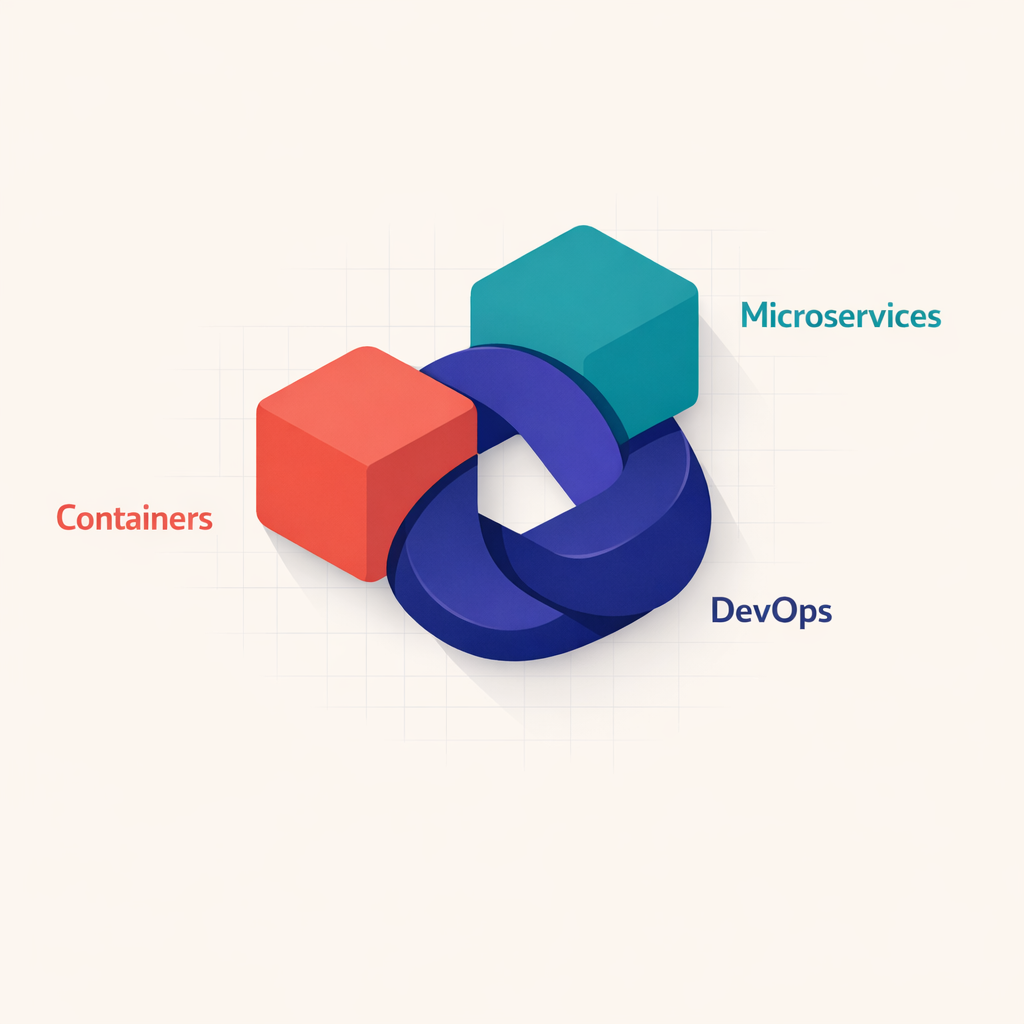 Minimalist illustration of the basics of cloud native development
As the technology landscape evolves at an unprecedented pace, grasping the fundamentals of cloud-native development is essential. It is akin to learning a new language—the language of today's predominant computing environment. In essence, adopting a "cloud-native" approach involves designing and building applications that fully leverage the advantages offered by the cloud.
The architecture of a cloud-native application rests on three foundational pillars: Containers, Microservices, and DevOps. Picture the cloud-native infrastructure as a city. The containers serve as the buildings, each housing distinct applications (or components thereof), equipped with the necessary resources for optimal performance.
Microservices resemble the various departments within these buildings. Working independently, they convene to create a cohesive and functional ecosystem. In this analogy, DevOps acts as the administrative body—a cultural mindset rather than a job title. It bridges the gap between development (the architects) and operations teams (the city managers), facilitating seamless continuous improvement and deployment.
Cloud-native development transcends mere buzzwords; it represents a pragmatic shift towards efficiency, agility, and scalability. By adopting cloud-native practices, organizations can architect applications that auto-scale, withstand failures, and expedite feature delivery. This approach is a crucial enabler for businesses navigating their digital transformation journeys, with sectors such as healthcare, e-commerce, and banking frequently deploying cloud-native applications.
As we traverse the city of cloud-native development, adhering to certain best practices is vital.
| Best Practice | Description |
|---|---|
| Design for failure | Given the distributed nature of cloud-native applications, anticipating and preparing for failure is crucial. Regular testing and integration are imperative. |
| Use automation | Leveraging CI/CD (Continuous Integration/Continuous Deployment) mechanisms is essential, including automated testing and blue-green deployments. |
| Imbibe scalability | The capacity to manage usage spikes and accommodate growth gracefully is a fundamental principle of cloud-native development. |
| Maintain security | Ensure data encryption, employ secure APIs, and enforce stringent access controls. |
In the next section, we will explore how cloud-native principles shape architectural patterns—an exciting journey into the essence of cloud-native.
In our exploration of cloud native app development, we identify three fundamental principles that underpin this approach. Understanding these core principles is essential for grasping the cloud native development guide. They include:
Containers have transformed the way applications are packaged and isolated for deployment across diverse platforms. One of the primary advantages they offer is environment agnosticism—the ability to run seamlessly on any machine, regardless of the underlying system. This feature is crucial in a cloud native architecture, where applications must be designed for scalability and portability.
Microservices represent the second cornerstone of the cloud native development guide. These are independent, modular components that together form a larger application. By breaking down an application into microservices, developers achieve a high degree of modularity and simplified maintenance.
Consider a real-world application with multiple features and functionalities. In a monolithic architecture, implementing changes or scaling specific features can be cumbersome. Conversely, by dividing the application into microservices, each service can be:
This modular approach facilitates significant flexibility without disrupting the functionality of other parts of the application.
The DevOps methodology is another essential principle of cloud native development, integrating the traditionally separate development and operations teams. This unified approach promotes agile practices, as well as continuous integration and continuous delivery (CI/CD), enhancing responsiveness to market changes.
In practice, this may involve closely-knit teams working on different microservices within the same application. They can deploy updates or new features using an integrated CI/CD pipeline, while simultaneously monitoring and supporting the application's operation in real-time.
In summary, containers, microservices, and the DevOps approach are not isolated components of the cloud native development guide; rather, they interconnect seamlessly, with each enhancing the others. Containers empower applications to run anywhere, microservices enable independent evolution and scaling, and the DevOps methodology accelerates delivery and improves responsiveness. Collectively, these principles form the foundation for a robust, scalable, and efficient cloud native architecture.
Cloud native architecture is a strategic approach to designing, developing, and deploying applications that fully leverage cloud environments. This methodology ensures that applications are both flexible and scalable by utilizing various architectural patterns and strategies.
As we explore cloud native architecture in greater detail, several recurring patterns and architectural elements emerge, each playing a vital role in facilitating effective cloud native application development:
Microservices form the backbone of cloud native architecture. A Microservices Architecture breaks complex systems into smaller, independent services that can be developed, deployed, and scaled autonomously. This structure significantly enhances scalability, allowing each service to adjust according to its specific demand. Additionally, it improves resilience, as a failure in one service does not propagate across the entire application.
The API Gateway is a design pattern commonly employed in cloud native architecture. It serves as a single entry point for clients interacting with the microservices. This design simplifies communication between clients and services, accommodating diverse client types and requirements.
Service Discovery is another fundamental pattern in cloud native architecture. Given the dynamic scaling and redeployment of services in the cloud, an effective mechanism for service discovery is essential. This pattern allows services to locate and communicate with one another, thereby enhancing both scalability and resilience.
The Circuit Breaker pattern is a critical strategy for ensuring resilience within a cloud native architecture. When a remote service fails or becomes unreachable, the Circuit Breaker helps prevent application failure by either failing fast or redirecting requests to a fallback service.
These architectural patterns collectively ensure both scalability and resilience, which are the hallmarks of an efficient cloud native application.
While cloud native architecture encompasses these key patterns, others, such as Sidecar, Ambassador, and Strangler, are also vital in specific scenarios. The appropriate selection and implementation of these patterns can significantly enhance application performance and resilience, thereby providing a substantial competitive advantage.
In conclusion, a thorough understanding of these architectural patterns and strategies is crucial for any organization aiming to successfully adopt cloud native application development. Each pattern offers distinct advantages, and their strategic combination can create robust, scalable, and resilient systems. This is how cloud native architecture ensures the scalability and resilience of your applications, empowering you to meet and exceed both business and customer expectations.
Cloud native architecture inherently supports scalability and resilience, which are key motivators behind the increasing interest in cloud native application development. Recognizing how these aspects are integrated within this architecture facilitates successful adherence to cloud native best practices.
From a scalability perspective, cloud native architecture enables virtually limitless on-demand scaling. As market demands fluctuate, applications structured under this model can effortlessly scale up or down due to the small, independent units inherent in their microservice design. This flexibility enables faster response times and accommodates increased user loads without excessive resource consumption.
Regarding resilience, the constructs within cloud native architecture are fundamentally designed to recover and adapt independently in the event of failures. Each microservice operates autonomously, ensuring that a failure in one service does not disrupt others. Additionally, the use of automated deployment pipelines fosters constant application health by allowing for rapid identification and resolution of issues.
Thus, the principles of scalability and resilience are central to the value proposition of cloud native architecture and applications:
| Aspect | Description |
|---|---|
| Scalability | Achieved through on-demand, limitless scaling of application service components. |
| Resilience | Ensured by independent service components that autonomously identify, heal, and adapt to failures. |
These principles solidify cloud native application development as a robust solution, capable of delivering seamless user experiences even under challenging conditions.
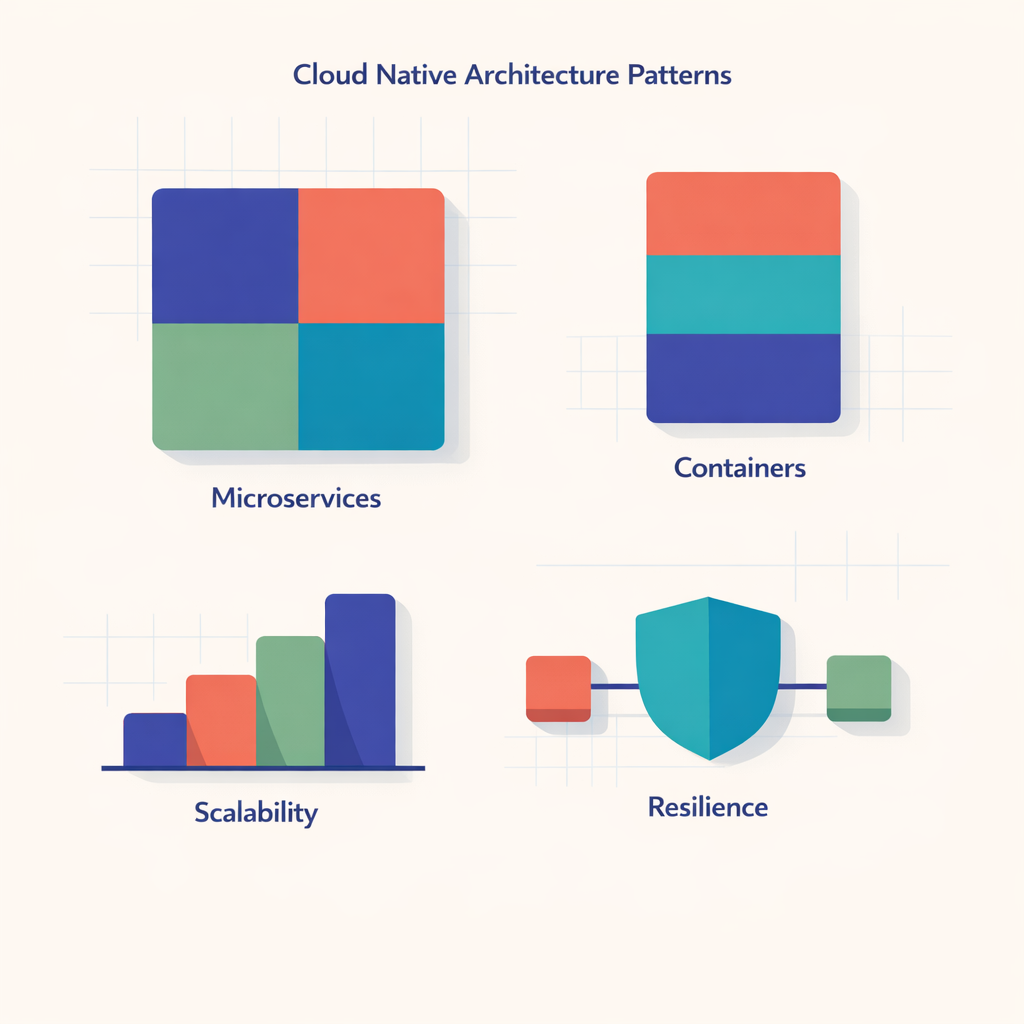 Diagram of common patterns in cloud native architecture
Continuous Integration/Continuous Deployment (CI/CD) is transforming application development by providing rapid feedback, quick error detection, and seamless delivery.
In the context of the cloud native development guide, CI/CD is a fundamental component. As a core DevOps practice, CI/CD streamlines the processes of developing, testing, and deploying software efficiently and continuously.
CI/CD allows developers to integrate code into a shared repository at regular intervals, often several times a day. This practice ensures that every committed code change is automatically built, tested, and prepared for release. The immediate feedback mechanism helps identify any issues resulting from changes, enabling quick resolutions and significantly reducing the risks associated with traditional waterfall methodologies.
When embedded within cloud native architectures, reliable CI/CD practices can substantially decrease the time and costs linked to software delivery. They also enhance software quality and predictability while bridging the gap between development and operations. This strategic approach supports speed and quality—two essential elements in cloud native application development.
Let’s explore the typical steps of a CI/CD pipeline in a cloud native environment:
Implementing best practices in CI/CD can significantly enhance the effectiveness of cloud native application development. These practices include:
In the next section, we will discuss observability within cloud native architecture and its role in identifying and resolving application performance issues.
Cloud-native development marks a paradigm shift in software production, emphasizing speed, agility, and flexibility, all built on a robust and secure foundation. Observability and security are integral components of this domain, essential for realizing its full potential. This section of the cloud native development guide explores these critical aspects within a cloud-native architecture, providing actionable insights and best practices for ensuring robust security and effective observability.
In a cloud-native context, observability refers to the ability to infer the state of a system based on its emitted outputs. It goes beyond traditional monitoring by not only tracking system behaviors but also providing context that helps us understand the "why" behind the system’s performance. This context-rich perspective is invaluable in complex microservice architectures, where numerous interdependent services operate concurrently.
To cultivate effective observability, it’s essential to adhere to cloud-native best practices:
Security focuses on preserving the integrity, confidentiality, and availability of systems, often summarized as the CIA triad. In cloud-native development, security is multifaceted, encompassing not only application-level protections but also network, data, and physical security measures.
To maintain security effectively, consider the following cloud-native best practices:
| Best Practice | Description |
|---|---|
| Embrace a zero-trust strategy | Assume that every network communication could pose a security risk. This approach promotes strict identity verification for all users and devices. |
| Implement regular vulnerability scanning | Promptly identifying and addressing vulnerabilities in containers and cloud services mitigates potential risks. |
| Leverage automated security policies | Automation reduces human errors, enhances compliance, and facilitates rapid and accurate responses to threats. |
In conclusion, by understanding these two elements and effectively integrating their best practices, organizations can achieve new levels of system resilience, scalability, and reliability.
Successfully transitioning to a cloud-native architecture requires a well-defined migration strategy. Understanding what constitutes cloud-native, familiarizing oneself with its core principles—such as containers, microservices, and DevOps—and being acquainted with architectural patterns are critical to the migration process. In this section of the cloud-native development guide, we explore strategic tips to facilitate your migration journey, highlight potential pitfalls, and offer actionable insights for mitigating these challenges during cloud-native application development.
To ensure scalability, resilience, and security throughout your cloud-native journey, consider the following migration strategies:
Successful migration to a cloud-native architecture involves a significant learning curve but yields substantial rewards. It enables organizations to fully harness the capabilities of the cloud, providing agility, scalability, and resilience—essential attributes of effective and adaptive cloud-native application development. By avoiding common pitfalls and following appropriate strategies, the outcomes will justify the effort invested.
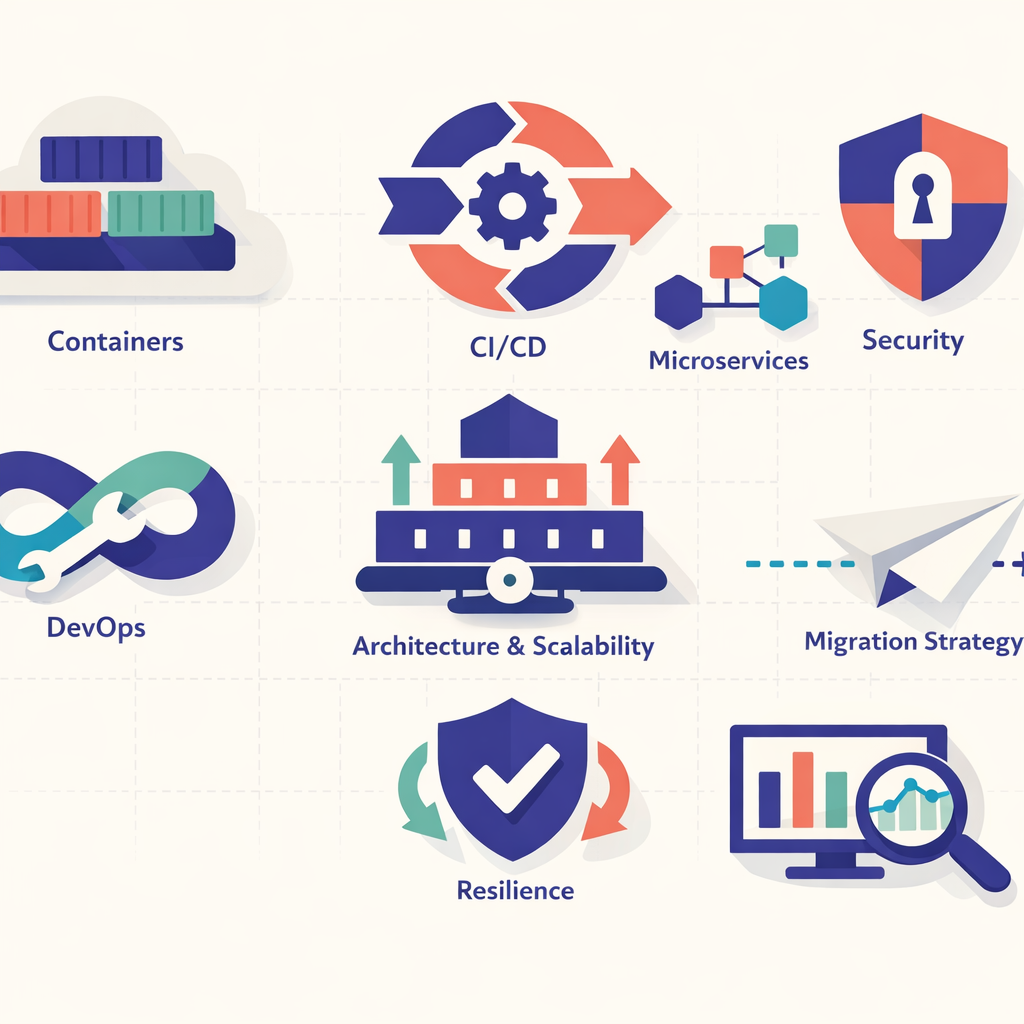 Illustration summarizing key components of the cloud-native development guide
Throughout our exploration of the cloud-native development guide, we traversed the diverse landscape of cloud-native architecture, beginning with its fundamental principles—containers, microservices, and DevOps—and examining their implications for our applications' scalability and resilience. Our comprehensive analysis of what is cloud native illustrated the evolution of application development, highlighting its direct relevance to contemporary business practices.
This guide has offered a thorough understanding of cloud-native architecture patterns, emphasizing several key concepts, including:
| Concept | Description |
|---|---|
| Scalability | Cloud-native application development facilitates efficient scaling of your applications. |
| Resilience | Adopting a cloud-native architecture enhances your system's resilience by providing a stable, fail-safe environment for your applications. |
| CI/CD | Cloud-native development promotes more efficient CI/CD processes with accelerated deployment cycles. |
| Observability and Security | The improved observability in cloud-native systems fosters better troubleshooting while simultaneously enhancing overall system security. |
| Migration Strategy and Pitfalls | We covered best practices to avoid typical pitfalls often encountered during the migration to cloud-native platforms. |
The future of cloud-native development is bright, becoming increasingly so as more organizations begin to harness this transformative approach. Understanding these concepts is the crucial first step towards a successful transition.
We would love to hear your perspectives on our cloud-native development guide. What has your experience been in implementing cloud-native architectures? What unique challenges have you faced, and how did you address them? Your real-world insights will enrich our community and provide valuable knowledge to our readers. Please feel free to share your comments and questions.
While this concludes the cloud-native development guide, it does not signify the end of your journey. Thank you for engaging with us, and we look forward to supporting you as you navigate your cloud-native path.