I
Imversion TeamPublished on March 22, 2026
19 min read
Custom Software Development Process: From Idea to Launch Explained
Explore the stages of custom software development to enhance your business efficiency.
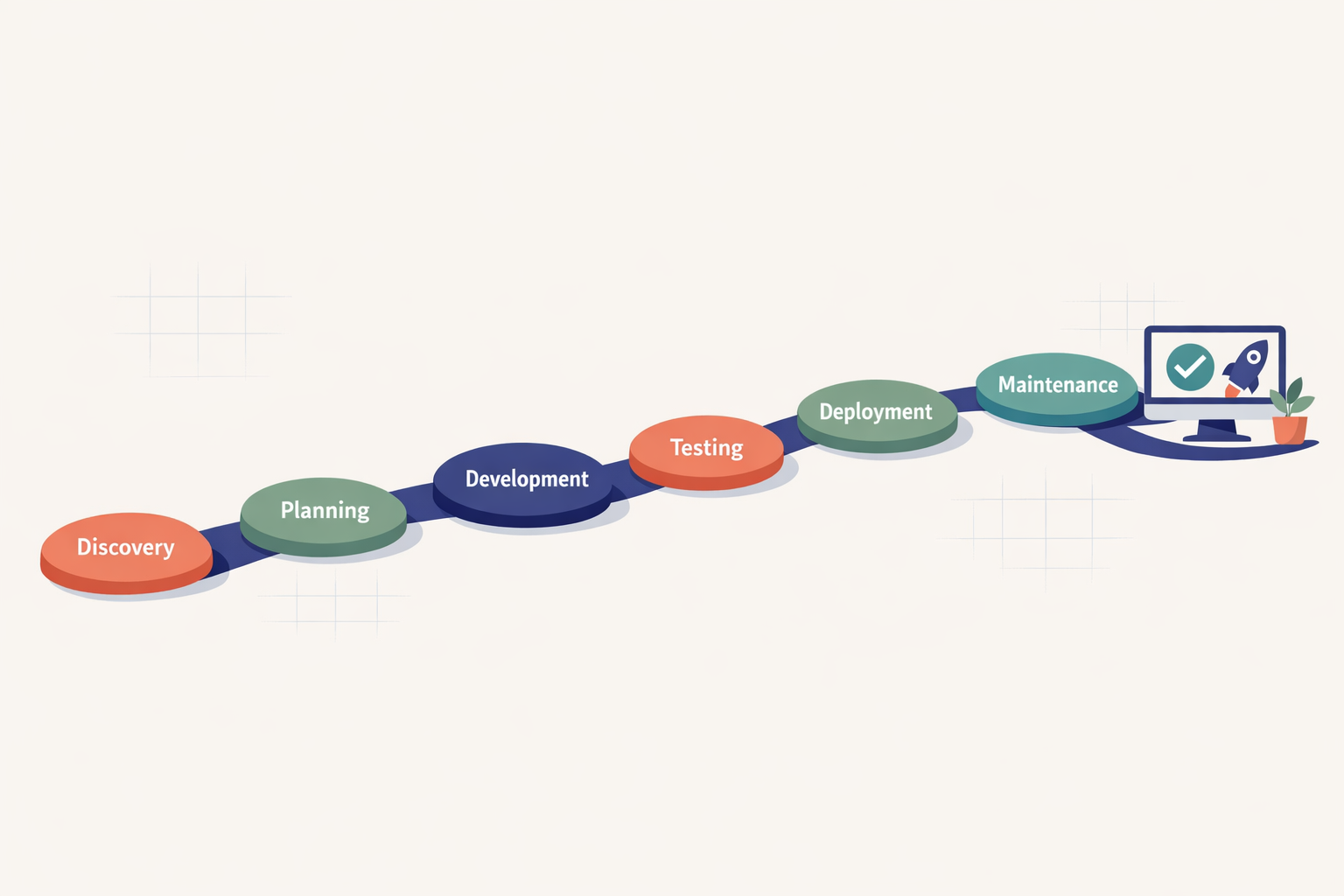
Explore the stages of custom software development to enhance your business efficiency.
Hero image showcasing the stages of the custom software development process.
In an increasingly digital world, the custom software development process is reshaping businesses and their operations. Custom software is specifically designed to address unique business requirements, facilitating growth, empowering teams, and creating a competitive advantage. This article aims to elucidate the software development lifecycle (SDLC) while highlighting its essential steps.
The transition from traditional, one-size-fits-all software models to custom solutions is not just a trend; it reflects an inevitable evolution driven by the need for flexibility, efficiency, and personalization in the business technology landscape. This transformative journey begins with an understanding of the SDLC and the intricacies of the custom software process.
The custom software development process consists of a series of systematic and well-defined phases that guide the planning, design, development, deployment, and maintenance of a software application. The SDLC outlined here fosters innovation, guarantees quality, and mitigates risks throughout the software creation journey. It serves as a fundamental framework that models the entire project lifecycle, from initial conception to final deployment.
The software development process encompasses the following stages:
Continue reading to explore each stage in detail and understand how they contribute to the successful development of custom software solutions.
Have questions about the custom software development process? Jump to our FAQ section to find the answers!
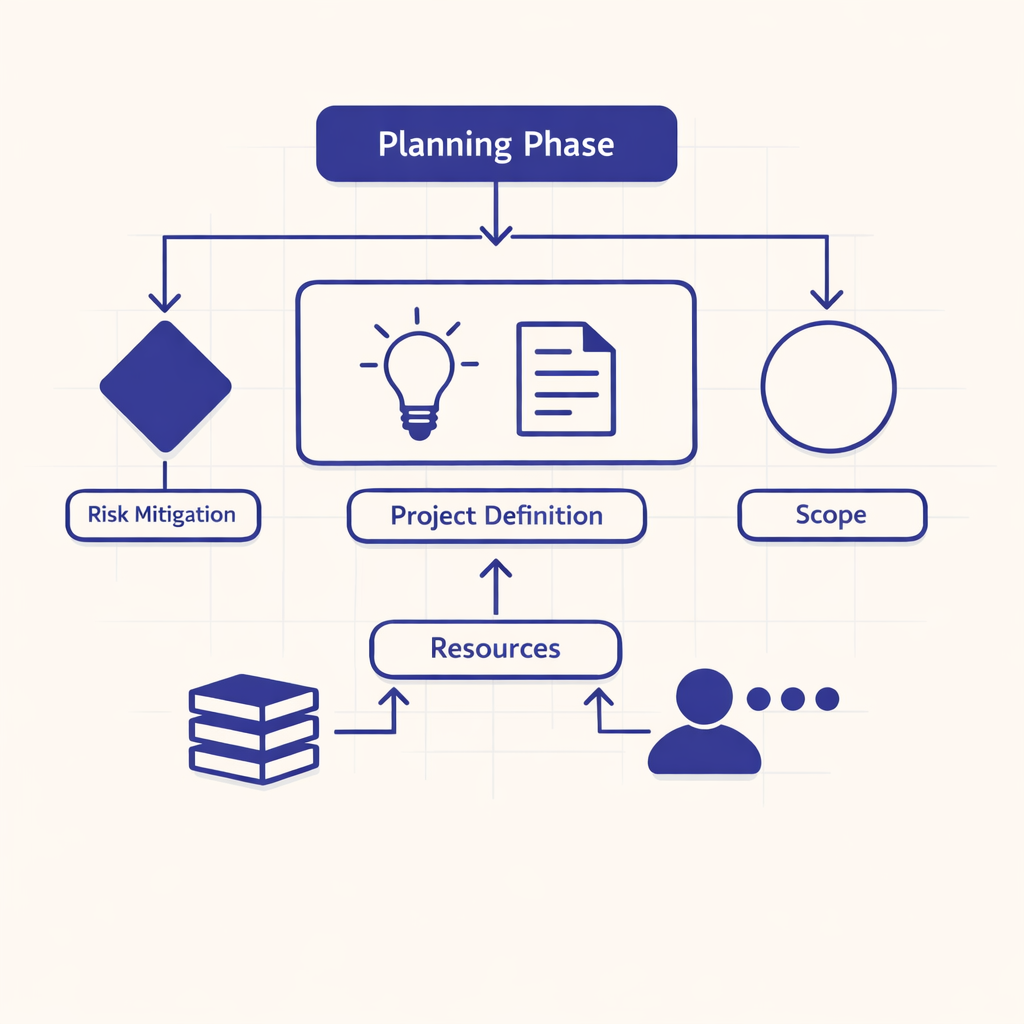 Technical diagram illustrating the planning phase of the software development process.
The Discovery phase plays a pivotal role in the custom software development process. It serves as the foundation upon which the rest of the Software Development Life Cycle (SDLC) is built, influencing the direction and success of the entire project. By dedicating sufficient attention to the Discovery phase, the SDLC transforms into a systematic, manageable procedure designed to deliver a high-performing software application that meets user requirements and withstands competition.
The Discovery phase encompasses comprehensive research, problem identification, understanding user needs, competition analysis, and defining the project scope. Each of these steps is crucial for directing the project by establishing clear, actionable objectives. By examining the competition, analyzing industry trends, and identifying user needs, you can create a product that carves out a unique space in the market.
At the outset, conduct in-depth research to gain a holistic understanding of the market, the potential user base, and existing competitors. Immerse yourself in market trends and engage in thorough competition analysis to discern what strategies are effective, what pitfalls to avoid, and where innovation opportunities lie.
One of the primary objectives of any software application is to solve a specific problem. Therefore, clearly identifying and understanding the issue your product aims to address is essential. This clarity renders your app development process more focused and efficient.
Understanding user needs is critical. This includes their preferences, pain points, and expectations regarding the software. It's essential to align your software product with their requirements, and even better if you can anticipate these needs before users recognize them themselves.
Finally, during the Discovery phase, you must define the project scope and establish clear objectives. Outline the functionalities, features, and design of your software. A well-defined scope aids in better project management, helps control budget considerations, and ensures that the final product aligns with planned objectives.
In conclusion, a well-executed Discovery phase lays the groundwork for successful custom software development. It bridges the gap between a software idea and the realization of a product that resonates with target users and distinguishes itself from the competition.
If you’re looking to develop a unique software application, please contact us. We specialize in the custom software process, leveraging our expertise and passion to transform your ideas into reality.
In the journey from idea to launch, the second critical step in the custom software development process is Planning. The success of software development heavily relies on this phase, as it lays the groundwork and establishes a comprehensive blueprint for project execution. This phase involves a close examination of the proposed software solution, risk mitigation strategies, resource allocation, project timeline, and team assembly.
During the planning phase, potential risks associated with custom software development are identified and managed. This process includes recognizing possible pitfalls and developing proactive strategies to address them. With a well-structured risk management plan, projects are more likely to remain on schedule, preventing avoidable issues and effectively addressing unforeseen complications.
After identifying risks, the next step in the planning stage is to create a detailed project timeline. This timeline acts as a roadmap guiding the various stages of the software development lifecycle (SDLC), providing clear direction and outlining the order of tasks.
Effective resource allocation is crucial in the planning stage. This includes determining and assigning the necessary financial, human, and technological resources required to support each phase of the software development lifecycle. Ensuring that every step and component of the SDLC is adequately resourced is essential to avoid bottlenecks in the app development process.
To bring a software idea to fruition, assembling a competent team with diverse skills is essential. The planning phase involves gathering individuals with expertise in various fields, such as UI/UX design, software engineering, quality assurance, and project management.
Why is planning essential in the custom software development process?
Can a project succeed without proper planning in software development?
How does the planning phase contribute to the SDLC?
Get in touch with us to learn more about how we can assist you with the planning phase of your custom software development process. Let's collaborate and plan for success! Contact us
 Conceptual illustration representing the process of UI/UX design in software development.
Creating successful software extends beyond merely providing a solution to a problem; it involves developing an application that captivates users through an engaging User Interface (UI) and a satisfying User Experience (UX). UI/UX design plays a crucial role in the custom software process, significantly influencing user engagement, adoption rates, and overall customer satisfaction.
The importance of UI/UX design within the software development lifecycle (SDLC) cannot be overstated. It goes beyond aesthetics and usability; it incorporates user-centered designs that enhance interactions, ensuring a seamless experience between users and the software.
When the UI/UX design is functional and easy to navigate, it boosts user engagement and encourages software adoption. A positive UX often determines whether users continue using the app or abandon it. Satisfying experiences foster loyalty and promote long-term retention.
In many ways, the app development process resembles an artist creating a masterpiece. An artist doesn't randomly mix colors; instead, they carefully craft each stroke, utilizing colors intentionally to produce an engaging and beautiful work of art.
Similarly, a comprehensive UI/UX design process is essential in custom software development. It ensures that the software provides an intuitive, aesthetically pleasing, and user-friendly environment, resulting in a product that stands out in the marketplace.
User Interface and User Experience design emerges in the third phase of the software development lifecycle, following Discovery and Planning. This stage involves crafting the visual and interactive elements of the software that users will engage with daily.
The goal of the UI/UX design phase is to create a seamless, intuitive, and engaging experience. This phase ensures that users can efficiently complete their tasks while enjoying the process. It translates the defined scope and objectives into a model that serves as the blueprint for the subsequent stages of development, testing, and deployment.
Implementing a solid UI/UX design is vital for the success of the custom software process. It guarantees that the final product not only addresses user problems but also delivers an enjoyable experience.
If you're ready to transform your software idea into a beautifully designed, user-friendly product, we are here to assist you. Reach out to us here.
In the software development lifecycle (SDLC), the Architecture stage plays a crucial role. It serves as the blueprint for the entire system, establishing the technical foundation for the subsequent development phase. This stage allows the custom software process to take shape, aligning with specific business needs and operational requirements.
Moreover, architectural design addresses key software quality attributes such as performance, usability, and reliability. Consequently, it functions as the linchpin that determines the ultimate success of the project in addressing critical business challenges through an efficient app development process.
The Software Architecture stage systematically breaks the software down into smaller, manageable components while defining their interactions. This can be likened to architectural blueprints in construction. It involves:
Grasping the complexities of the software development lifecycle becomes much easier when you recognize the key roles involved. Software Architects are the pivotal players in this stage. They engage deeply in making high-level design decisions and delivering a system that aligns with client requirements. They conduct a comprehensive review of service, network, and data layers, which contribute to the overall complexity of a project.
While the architecture stage offers clear advantages, it is not without its risks. Potential issues include incorrect technology selection, an overly complex system architecture, or a lack of understanding of the project's essential characteristics.
To mitigate these risks, it is essential to have:
By effectively managing these risks, businesses can ensure a successful translation of user and market needs into a functional and efficient software product.
What is the role of Software Architecture in SDLC?
Software Architecture serves as the skeleton that supports an application's functionality, guiding the system's design and development while creating a clear roadmap for developers to follow.
Why is Software Architecture necessary for custom software development?
Software Architecture facilitates the custom software process by enabling seamless integration of various system components, enhancing overall system performance, and aiding in risk management.
Who makes the decisions regarding Software Architecture?
Decisions concerning software architecture are ideally made by a Software Architect—a professional expert in designing systems, reviewing technology stacks, and managing architectural risks.
An understanding of software architecture is fundamental to achieving your software project goals. Join us on this journey to turn your vision into reality. Get in touch with us at /contact.
In the journey from a preliminary idea to a comprehensive product offering, two crucial stages in the custom software development process emerge: Development and Testing. Ensuring a seamless user experience involves not only creating a functional product but also validating its performance under various conditions.
The development stage in the software development lifecycle (SDLC) is where the technical blueprint crafted during the architecture phase is transformed into a working product. At this point, thanks to earlier meticulous planning and design, developers focus on writing the appropriate code to create functional modules and components.
While the eagerness to launch your product is understandable, it’s essential to remember that each module must undergo a thorough review to identify any discrepancies before proceeding. As systematic as development may be, it remains a creative endeavor that requires both skill and extensive expertise—factors we prioritize in our custom software development services (/services/custom-software-development).
Once the components are developed, the Testing phase begins. This phase ensures that all built modules operate together effectively, as outlined in the SDLC process. Here, the developed software undergoes rigorous testing to detect any bugs or inconsistencies that may have been overlooked during development. This vital step addresses any flaws and verifies the software's overall functionality.
The Testing stage is as important as Development in the app development process. It helps mitigate the risk of launching a product that may not meet user or market needs.
Various methodologies can guide both the Development and Testing stages. The choice of methodology depends on factors such as project scope, client requirements, time frame, expertise, and cost.
Some popular methodologies include:
| Methodology | Description |
|---|---|
| Waterfall | A linear approach where development flows sequentially. |
| Agile | Promotes continuous iteration in development and testing. |
| Incremental | Product is developed and tested in parts for clarity. |
Several roles contribute to the success of the development and testing stages. Key roles include, but are not limited to, software developers, testers, system analysts, and project managers.
Every stage of the SDLC presents its unique set of challenges. The key to navigating these challenges lies in following best practices, learning from past projects—whether successes or failures—and collaborating with a highly skilled team that understands and respects the process.
Questions about processes, methodologies, or roles? We're here to help! Check out some frequently asked questions below, or get in touch with us through our contact page (/contact).
The Building or Development stage of the software development lifecycle is where the actual coding takes place. Here, developers translate planned specifications and architectural designs into reality. This is the phase where the scaffolding of code, data, and design elements converges, following the app development process.
Planning and prioritizing the development tasks is a key step in this phase, which involves:
Furthermore, maintaining high-quality standards is crucial at this stage. The SDLC emphasizes four important activities:
This approach ensures that the software is built efficiently and establishes a strong foundation for the subsequent stages of Testing and Deployment.
Despite the seemingly straightforward nature of this process, having experienced developers on your team is vital. They must be adept at navigating unexpected changes and unforeseen complexities. Without such expertise, the risks in the software development lifecycle could significantly increase.
Have questions about the Building phase? Here are some common inquiries:
How long does the Building phase take?
The duration depends on the project's complexity and size, ranging from weeks to months or longer.
What skills are required in the Building phase?
The development team should be proficient in relevant programming languages and possess a thorough understanding of the SDLC and app development process.
How can risks be managed during the Building phase?
Regular code reviews, refactoring, and strict version control are essential to managing risks during this phase.
Ready to build your custom software application? Our expert developers can guide you, ensuring an efficient and productive process. Connect with us here: /contact.
After various steps in the software development lifecycle, we reach a pivotal moment: testing the software. Understanding the SDLC process is incomplete without examining this stage, where the software undergoes rigorous inspections to ensure its functionality and compatibility.
Testing can be an exhaustive process involving multiple methodologies. The objective is to guarantee the software's operational efficiency, performance, and reliability. It includes:
Ensuring the software is free from glitches or operational inefficiencies is the ultimate goal of this stage in the app development process. Any errors or bugs detected are reported to the development team for rectification.
As mentioned earlier, testing is not a one-time process. It is iterative, conducted as new functionalities are added or changes are made. Rigorous testing guarantees that the final software product meets desired specifications and delivers a seamless user experience.
Testing is critical not only for bespoke software solutions but also for mainstream applications. In our next section, we’ll explore how the testing and development processes culminate in the final crucial step: deployment.
Still have questions about software testing? Reach out at /contact for insights and expert advice.
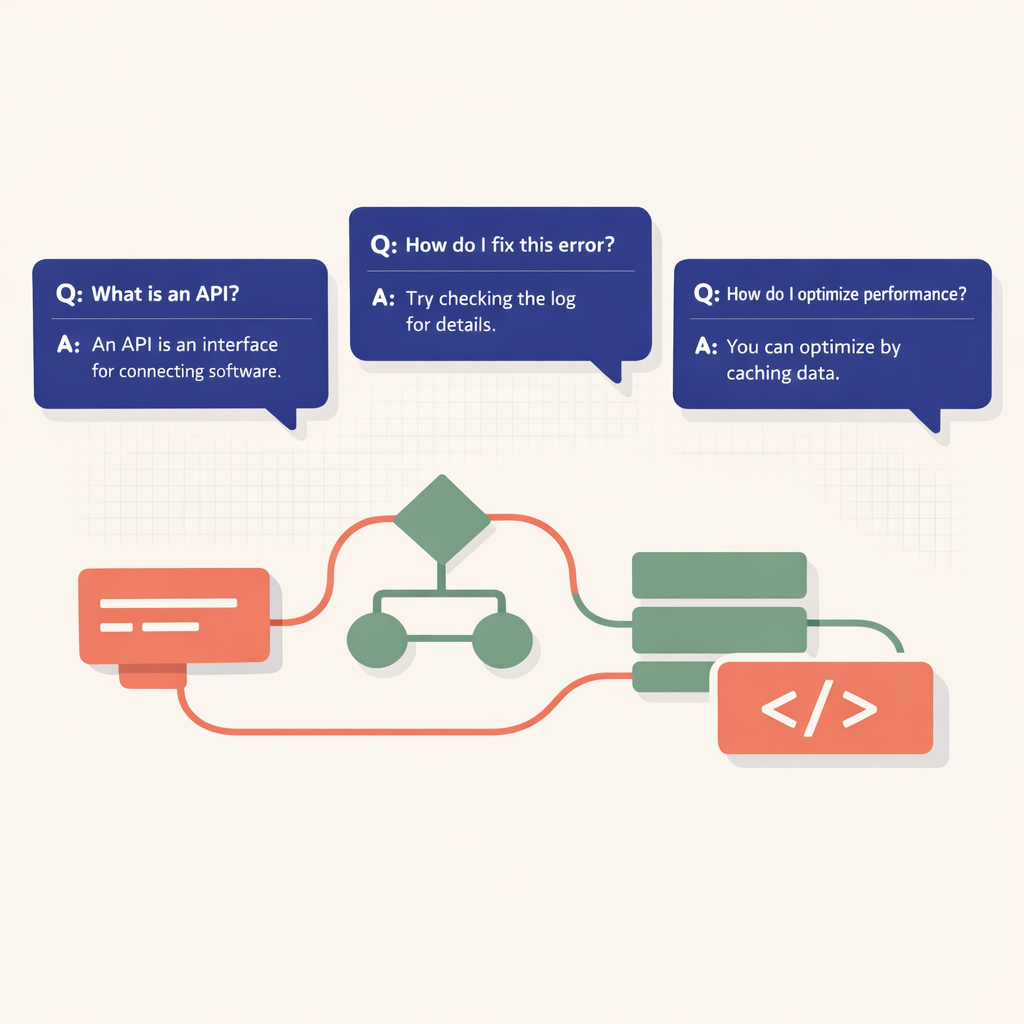 An illustration presenting an FAQ discourse on a conceptualized software architecture background.
When discussing the custom software development process, it's natural to have numerous questions. After all, this comprehensive procedure spans from the initial discovery phase to post-launch maintenance. While the software development lifecycle is a standardized framework followed internationally, inquiries about its application to specific projects frequently arise. Below, we address some of the most commonly asked questions to enhance your understanding of the process.
The discovery phase is crucial in the custom software development process. It establishes the foundation for the entire project by identifying problems, understanding user and market needs, defining project scope, setting clear objectives, and conducting market research. This stage ensures that the product is designed to meet user requirements and distinguish itself in the marketplace.
Application development is indeed a subset of custom software development, making the Software Development Lifecycle (SDLC) applicable in this context as well. Similar to software projects, an app’s development journey includes the following phases:
| Phase | Description |
|---|---|
| Discovery | Identify requirements and goals |
| Planning | Outline resources and timeline |
| Design & Architecture | Create a blueprint for the app |
| Core Development | Actual coding and building of the app |
| Testing | Ensure functionality and fix bugs |
| Deployment | Launching the app to users |
| Post-Deployment | Ongoing maintenance and updates |
Thus, understanding the SDLC process is instrumental in grasping the app development journey.
Despite thorough planning, potential risks can emerge throughout the SDLC. These may include:
However, a team experienced in the custom software process can effectively mitigate these risks while maintaining quality and adhering to project timelines.
Understanding the complexities of software development entails navigating an array of intricate details. These questions merely serve as a starting point. Project owners and developers will continuously face critical decisions that collectively shape a successful software product. For additional inquiries on this topic or if you seek clarification on aspects not covered in these FAQs, please feel free to reach out to us via /contact.