S
Sagar HebbalePublished on April 15, 2026
19 min read
7 Signs Your Business Has Outgrown Off-the-Shelf Software
Discover when it's time to invest in custom software for your growing business.
Discover when it's time to invest in custom software for your growing business.
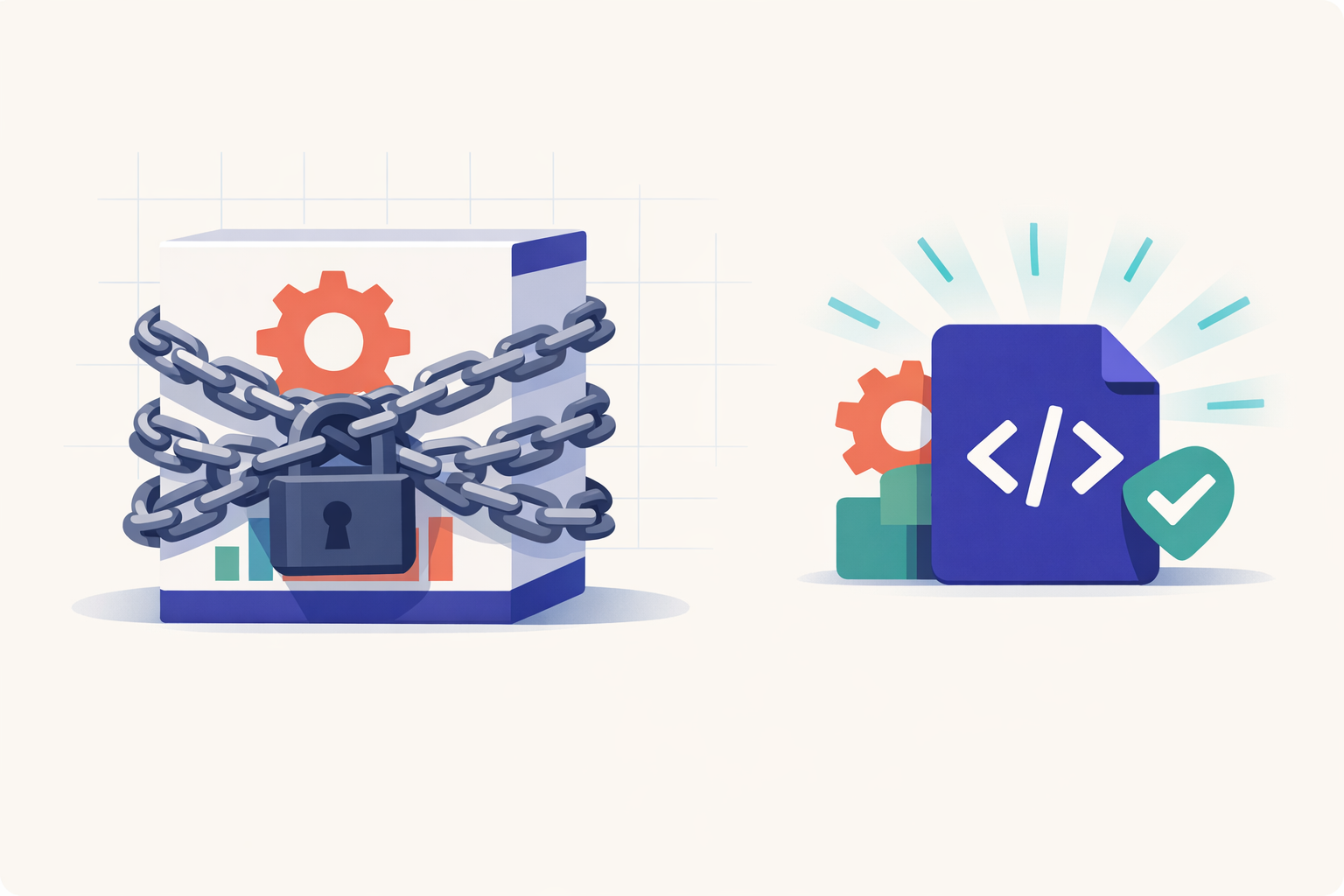
A comparison between chained off-the-shelf software and free custom software
As companies expand, there often comes a critical moment when they realize that off-the-shelf software is no longer sufficient to meet their evolving needs. Faced with escalating operations and increasing complexities, businesses frequently encounter difficulties in addressing their unique requirements using standard solutions. Consequently, it becomes essential to recognize when the time has come to consider custom software.
Inflexibility: Do you feel hindered in your operations due to the limitations of your current software? Are you increasingly relying on workarounds? This inflexibility could indicate that your business needs a more tailored software solution.
Scalability Concerns: As your user base and transaction volume rise, you may encounter frequent software crashes that disrupt your operations. These challenges signal a need for a more robust and scalable software solution.
Higher Costs: The initial cost of off-the-shelf software may seem appealing, but over time, subscription fees can accumulate dramatically. You might find that investing in custom software could be more cost-effective in the long run.
Inadequate Support: If the support from your off-the-shelf provider doesn’t keep pace with your business growth, it can be frustrating. Effective support should evolve alongside your business, but standardized solutions often fall short in this regard.
Integration Problems: Smooth system integration is crucial for productivity. If your current software is problematic and disrupts your workflow, it may be time to consider transitioning to a custom solution.
Lack of Competitive Edge: If your software fails to provide you with a strategic advantage in your market, this is a clear indication that your business might benefit from custom software.
Neglecting these software challenges and remaining committed to an off-the-shelf solution can lead to increased costs, more downtime, and a decline in efficiency and productivity.
When contemplating a transition to custom software, it's important to balance upfront costs against potential returns on investment. Additionally, consider the savings from no longer incurring subscription fees and the enhanced efficiency that custom software can offer.
A well-devised strategy is essential for transitioning from off-the-shelf to custom software. This involves clearly defining your requirements, planning for necessary training, and aligning the transition with your broader business objectives.
By recognizing these signs and taking proactive measures, you can mitigate software-related growing pains and better position your business for future success.
Ready to transition to custom software? Get in touch with us and leverage our expertise in Custom Software Development.
 Minimalist infographic of 7 signs your business has outgrown off-the-shelf software
Recognizing the signs of software growing pains before they lead to significant operational disruptions is essential for a thriving business. Versatile, scalable, and tailored to specific needs, custom software presents a sustainable solution as your business evolves beyond the constraints of off-the-shelf software. Here are seven clear indicators that it’s time to make the transition.
While off-the-shelf software is initially easy to adopt, it often lacks the flexibility needed to accommodate your unique business processes and workflows. You may notice this rigidity when your team frequently resorts to workarounds or employs multiple tools to manage tasks that could be streamlined within a single platform. Common issues include:
The result? It hampers efficiency and restricts your business operations.
For many growing businesses, scalability is a primary goal. However, off-the-shelf solutions may struggle to support significant user growth or manage a substantial increase in transaction volume. Indicators such as frequent screen freezes, slow application response times, or software crashes signal a need for robust, scalable custom software before these performance issues negatively affect customer satisfaction or overall business operations.
Though the lower upfront costs of off-the-shelf software can be enticing, these expenses can accumulate over time. If you're finding that the total cost of ownership—including ongoing subscription costs, training, support, and the addition of extra features—has become significantly high, it may be more cost-effective to invest in a custom solution.
As your business expands, the need for enhanced software support and customization increases. Overwhelmed off-the-shelf software providers may struggle to deliver the level of attention and service you require, adversely affecting your operations over time.
Seamless integration among your various software applications is crucial for operational efficiency. If you encounter tedious integration processes that hinder productivity or existing software fails to integrate smoothly with new tools, it’s time to consider a custom solution.
A key drawback of off-the-shelf software is that it is often used by your competitors as well. This commonality makes it difficult to establish and maintain a competitive edge. Transitioning to a custom solution designed specifically for your operations can provide the advantage necessary to outperform the competition.
In today’s digital landscape, data security is paramount. If your current software lacks advanced security features or if you have surpassed its data storage capabilities, you expose your business to significant risks. A custom software solution, equipped with robust security measures, can effectively safeguard your sensitive data and protect your reputation.
Visit our Custom Software Development services page for more insights on transitioning from off-the-shelf software. Or get in touch [/contact] to discuss your custom software requirements.
Frequently Asked Questions:
Persisting with a Software-as-a-Service (SaaS) solution that no longer meets your business needs is akin to driving a car with worn-out tires—you might still be moving, but the associated risks can easily outweigh the convenience. Understanding the dangers of outdated SaaS is essential to prevent future obstacles within your organization.
Here are some potential hazards of ignoring the signs of an outgrown software:
One of the key limitations businesses face as they grow is a SaaS system's inability to react efficiently to evolving business processes. This can slow down critical tasks and lead to tedious manual interventions. Over time, this lack of efficiency may result in:
While SaaS solutions might initially appear economically attractive, there comes a point when the total costs associated with their limitations can surpass the initial savings. Some of the hidden costs include:
| Cost Factor | Description |
|---|---|
| Ongoing subscription fees | Recurring expenses that can accumulate over time. |
| Additional charges for extra features | Costs incurred for necessary upgrades or functionalities. |
| Increased training costs due to software complexities | Investment in training staff to navigate the system. |
| Costs associated with lack of proper integration | Expenses arising from ineffective system connections. |
Meeting the need for custom software could lead to greater cost-efficiency.
When you are unable to adapt quickly to market changes due to a rigid software system, your competition may gain a significant advantage. Being stuck with outdated SaaS can result in missed opportunities for innovation and growth in alignment with the latest market trends.
Transitioning to custom software enables you to experiment, innovate, and remain ahead of the curve.
Every business expansion comes with its own set of software growing pains. Although SaaS solutions may suffice during one stage of development, they often fall short as your business scales and evolves. Attempting to augment a SaaS solution might seem like the simplest option, but it often amounts to applying a band-aid to a deep wound.
By persisting with an inadequate software solution, you risk:
Taking decisive steps towards building a customized solution allows you to confront these growth pains head-on, enabling your business to expand without hindrance.
In summary, while the transition to custom software may seem intimidating, the risks associated with continuing to use an outgrown SaaS solution can far exceed the costs and efforts involved. Remember, the need to customize is not a predicament; rather, it signifies your success. Don't stifle your growth potential by clinging to a software solution that is no longer fit for purpose.
For a smooth transition, Contact Us to discuss your custom software development needs today.
Transitioning from off-the-shelf software to a custom solution is an important investment. Therefore, understanding the cost implications and potential return on investment (ROI) is crucial. This decision should focus not only on initial expenses but also on the long-term benefits and value that custom software can deliver to businesses.
Custom software development requires substantial upfront costs compared to off-the-shelf solutions. However, this investment typically pays off over time, as custom software eliminates reliance on the recurring subscription costs associated with Software as a Service (SaaS) solutions.
The potential for a higher ROI becomes clear when assessing the advantages of custom software, which include:
Moreover, businesses can realize cost savings by reducing the need for frequent upgrades and patches, as well as minimizing the manual interventions and workarounds commonly required with standard software.
Custom software offers unparalleled long-term value for several reasons:
Tailored to Your Business Processes: Custom software is designed to align with your unique business processes, rather than forcing your operations to adapt to a generic system. This alignment often leads to enhanced operational efficiency and productivity.
Facilitates Business Growth: Custom solutions are scalable, enabling them to grow alongside your company and alleviating software growth pains that can hinder progress.
Enhances Data Security: Custom software can incorporate advanced security measures, safeguarding your business data in ways that generic software may not provide.
Improves Customer Experience: The ability to integrate features specifically designed for your clients enhances their overall experience and satisfaction with your business.
A successful transition to custom software requires a strategic approach to minimize costs and maximize ROI. Clearly articulate your business needs, collaborate with an experienced business software development team, and engage end users throughout the development process to ensure the final product meets your requirements and is user-friendly.
Remember, investing in custom software is an investment in the future of your business, often resulting in significant long-term ROI.
If your business is struggling with the limitations of off-the-shelf software and is ready for a solution that better aligns with your needs, please contact us to discuss tailored options just for you.
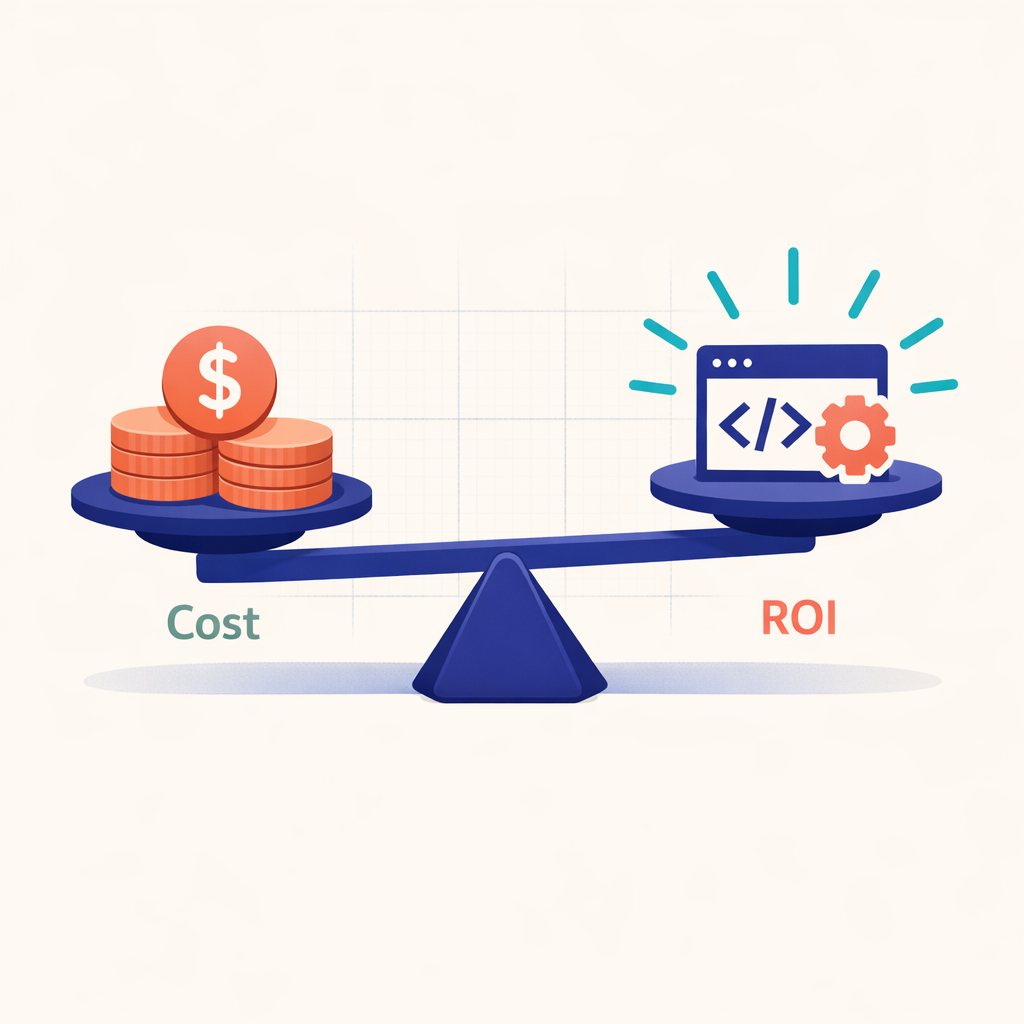 Balance scale comparing cost and ROI of switching to custom software
Transitioning to custom software is not an overnight process. It requires thorough strategizing, focused implementation, and nurturing stakeholder buy-in at every stage. In this guide, we will break down this seemingly monumental task into actionable steps to facilitate your business's transition and alleviate potential software growing pains.
The first crucial step is to identify and engage your key stakeholders. These individuals may include business leaders, IT personnel, and, most importantly, your end users—those who will ultimately interact with the new software. Involve them from the outset and gather their insights regarding the current system, its limitations, and their expectations for the new custom solution. Early engagement will shape your transition strategy and ensure it is aligned with your business's needs.
Data is the lifeblood of your organization, and its secure handling during the transition is essential. This process involves migrating data from the old system to the new custom software. Invest in exhaustive planning, engage skilled experts, and conduct tests before going live to prevent data corruption or loss.
The success of custom software largely depends on its user-friendliness. Dedicate time to training stakeholders on the software's interface and functionality. Consider providing a mix of group classes, online resources, and one-on-one support as part of your transition plan.
After the launch, don’t rest on your laurels. In order to implement improvements and address any software growing pains, actively seek feedback, identify underlying issues, and respond promptly. Remember, the transition process does not conclude with the implementation of new software; it requires ongoing efforts to ensure a seamless experience for users.
By following these steps, your business can effectively transition from the limitations of off-the-shelf solutions to a system that fully meets your bespoke needs, preparing you for the future.
If your current SaaS solution fails to meet your unique operational requirements, leads to excessive costs, or limits business scalability, it may be time to consider a switch. Read more here: [/services/custom-software-development].
Transitioning to custom software can involve challenges such as temporary business disruption, data migration issues, and the necessity for extensive training. However, with careful planning and execution, these hurdles can be mitigated to ensure a smooth transition.
The timeline for transition varies significantly based on your business requirements, software complexity, and training needs. Generally, anticipate several weeks to a few months for a comprehensive transition.
Remember, implementing custom software is a strategic decision that can drive business growth, enhance capabilities, and deliver a strong return on investment. If you need custom software or require guidance on transitioning away from SaaS, reach out to our software experts at [/contact].
As businesses grow and evolve, they often encounter complex decision-making processes, especially in technology. When you've outgrown your SaaS solution and begin to consider transitioning to custom software, it's natural to have questions. Here, we address three frequently asked questions to provide insights into the challenges of software growing pains and the necessity for custom software.
Recognizing the signs can be challenging, but there are some clear indicators to consider:
| Indicators | Description |
|---|---|
| Inflexibility | If your SaaS solution proves inflexible and fails to meet your changing business needs, or if you find yourself constantly seeking workarounds, it's likely that you've outgrown it. |
| Software Crashes | Frequent software crashes due to increased user load and transaction volumes clearly indicate the need for a change. |
| Costs | The expenses associated with a SaaS subscription may become prohibitive, especially when cumulative costs over time outweigh a one-time investment in custom software. |
| Inadequate Support | Insufficient support from your SaaS provider that erodes operational efficiency, along with cumbersome system integrations, further underscores the need to make a transition. |
The primary advantage of custom software is its ability to align precisely with your unique business needs. Additional benefits include:
Transitioning is not an overnight process; it requires careful strategizing and meticulous execution. Here are a few steps to help alleviate software growing pains and ease the transition:
Remember, this significant investment can yield substantial returns and prepare your business for sustained growth. If you still have questions or need assistance in making the transition, feel free to reach out to us (/contact).
As we conclude our discussion, it's important to recognize that navigating the software landscape can often feel overwhelming. When problems begin to pile up and your business starts to feel the strain of outgrowing off-the-shelf software, it's time to reassess your software needs. Here’s a quick checklist for you to consider:
If your answers lean towards yes, it may be time to consider custom software. Recognizing your business's unique needs is the first step toward making impactful decisions.
However, transitioning to custom software is not an immediate switch. It requires careful planning and a solid strategy. Be clear about the areas needing customization, understand the potential costs and expected return on investment (ROI), and ensure that the transition doesn't disrupt your operations.
Settling for anything less than what your business truly requires can stifle your growth and negatively affect your market positioning. Take the time to evaluate your software needs and do not allow the limitations of a SaaS solution to dictate your business's potential. For a strategic and professional approach to software development and consultation, explore our services (/services/custom-software-development) and get in touch with us (/contact).
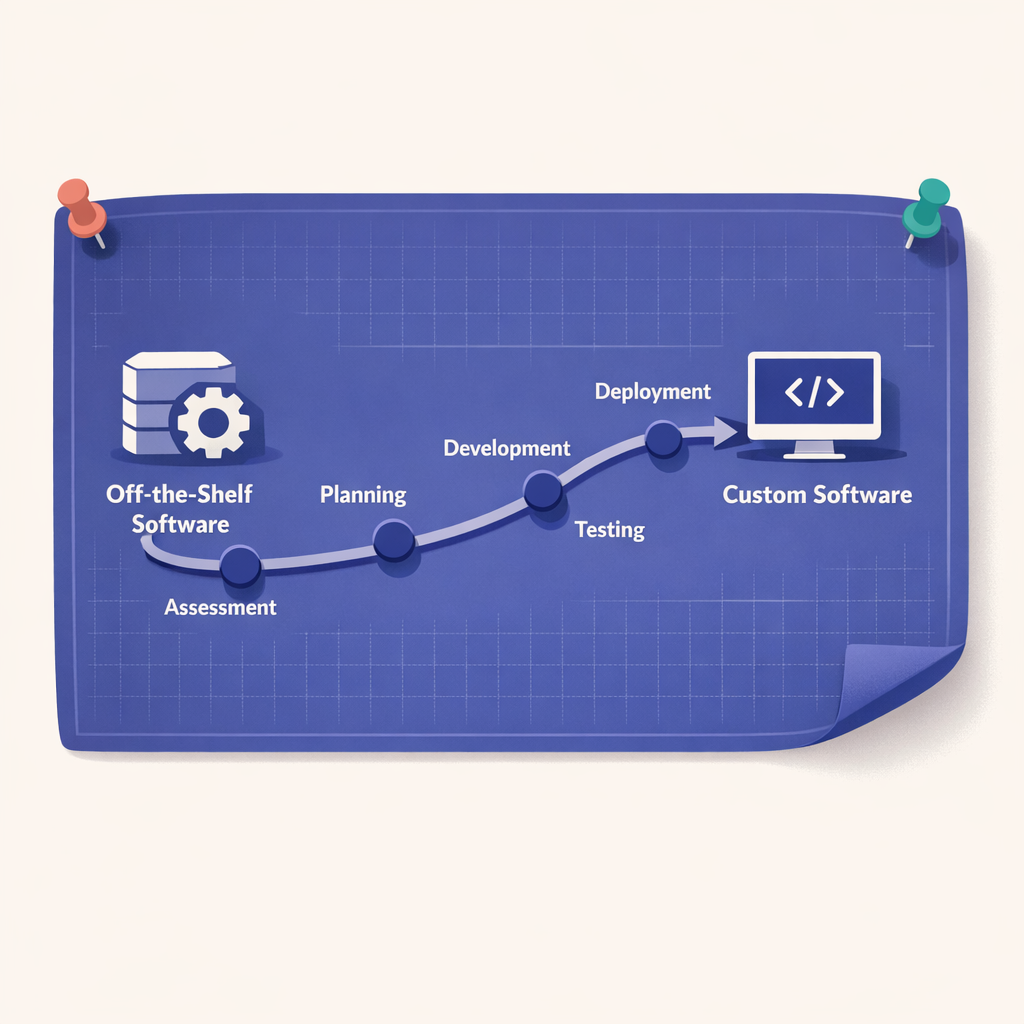 Blueprint of a transition strategy from off-the-shelf to custom software
If you're experiencing the growing pains associated with off-the-shelf software, it may be time to consider a transition to a custom solution. Customized software can help reduce inefficiencies, decrease costs, and provide the competitive edge that business owners seek. Remember, sticking with an inadequate system can expose you to risks and limitations.