I
Imversion TeamPublished on March 23, 2026
20 min read
Voice AI for Customer Service: Architecture, Benefits & ROI Insights
Discover how voice AI is transforming customer service and boosting ROI with AI voice agents.

Discover how voice AI is transforming customer service and boosting ROI with AI voice agents.
Customer service headset with voice AI symbol
In this blog, we aim to explore the burgeoning role of 'Voice AI' in the customer service sector, driven by advancements in artificial intelligence. The integration of Voice AI in Customer Service is reshaping the business landscape by enabling more efficient and personalized interactions. The shift from traditional call centers to AI voice agents and voice bot customer support has paved the way for a more customer-centric approach.
Voice AI operates on the foundational principle of the STT-LLM-TTS flow. The process begins with Speech to Text (STT), which converts spoken language into written text. This is followed by the Language Model (LLM), which analyzes the text to generate an appropriate response based on the customer's needs and preferences. Finally, Text to Speech (TTS) converts this written response into verbal communication. This systematic approach empowers AI voice agents to engage effectively with customers, ultimately enhancing the overall user experience.
| Feature | Real-Time Systems | Turn-Based Systems |
|---|---|---|
| Processing Speed | Processes voice inputs instantaneously | Allows users to wait for the AI's response before proceeding |
| User Interaction | Ideal for hands-free, immediate responses | Facilitates conversation flows that resemble natural human interactions |
Voice AI significantly transforms customer service across various industries, including healthcare, e-commerce, and banking. Its potential benefits include:
Furthermore, this technology has demonstrated its ability to improve user engagement.
For more detailed information on AI voice agents or AI chatbot development, please visit /services/ai-agents and /services/ai-chatbot-development.
Do you have further questions or require assistance in implementing Voice AI within your customer service department? Feel free to reach out or consult /contact?service=voice-ai.
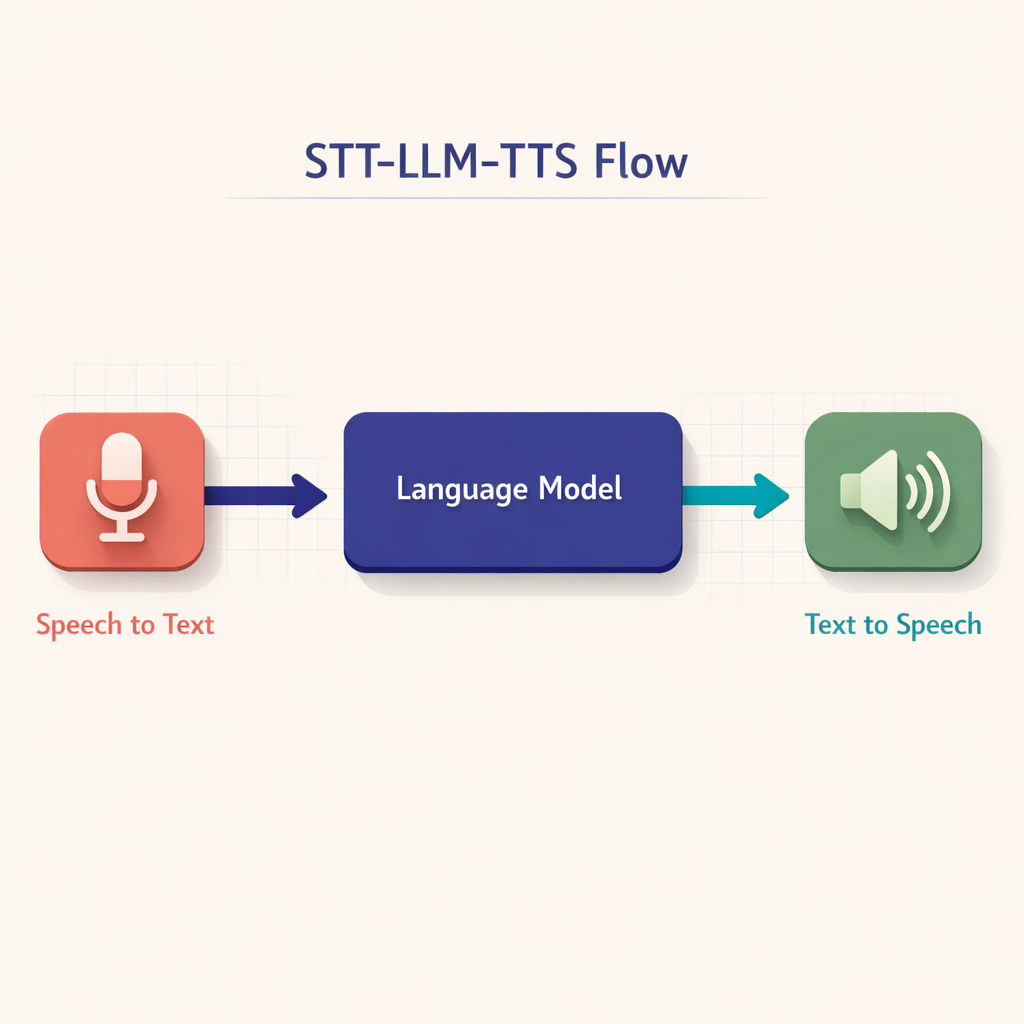 STT-LLM-TTS flow diagram
In the pursuit of enhanced customer service, a pivotal role is played by Voice AI's mechanism – the STT-LLM-TTS flow. This three-step sequential process, comprising Speech to Text (STT), Language Model (LLM), and Text to Speech (TTS), facilitates seamless communication between AI voice agents and customers.
The first step involves STT, where spoken language is translated into written form. This functionality is utilized across a broad spectrum of services, from voice AI customer service to call centers, thereby enhancing the interactivity of the process.
Subsequently, the LLM interprets the text to identify the customer's intent, thereby formulating an appropriate response. The integration of AI and Natural Language Processing (NLP) enriches this stage, enabling the comprehension of complex sentence structures and colloquial phrases.
Lastly, TTS reconverts the formulated written response back into spoken language, with the intent of mimicking natural human conversation to enhance the overall user experience.
Voice AI can function in two modes:
| Model | Description | Benefits |
|---|---|---|
| Real-Time | Instantly processes voice prompts for immediate responses. | Beneficial for urgent inquiries. |
| Turn-Based | Mimics natural conversational flow, requiring a pause for AI response. | Enhances overall customer interaction. |
The utility of this flow is not confined to any single industry. From healthcare to e-commerce and banking, it is transforming customer service across various sectors. The flow improves user engagement, reduces wait times, manages appointment scheduling, and facilitates first-call resolutions.
While the STT-LLM-TTS flow brings numerous benefits, it also presents certain challenges. Issues related to data privacy, cultural nuances, and dialect variations are critical hurdles that must be addressed.
For personalized advice on leveraging voice AI in your business, contact us today.
As we continue to explore the topic of 'Voice AI', one compelling aspect to examine is the distinction between real-time and turn-based voice AI systems within the realm of customer service. Understanding these variations is essential, as each system addresses unique needs and use cases.
Real-time Voice AI revolves around immediacy. It instantly processes voice input and generates responses on-the-go, leading to a dynamic conversational environment. Unlike turn-based systems, real-time voice AI for customer service does not require a pause after each statement or question. This model is particularly suited for scenarios that demand immediate response, such as navigation assistance or emergency services.
Pros and Cons:
| Pros | Cons |
|---|---|
| High responsiveness, delivering rapid results | May interrupt users before they have completed their inputs |
| Ideal for applications requiring immediate feedback | Could misinterpret speech patterns due to the rapid processing |
Conversely, turn-based voice AI operates more like human conversation. In this model, each participant—the user and the AI voice agent—takes turns during the interaction. The AI processes the input only after the user has finished speaking, generating a response subsequently.
Turn-based systems excel in managing comprehensive customer interactions across various topics, particularly in industries such as banking, e-commerce, and healthcare. In this context, conversations typically follow a structured flow, which is characterized by a series of inquiries and responses, making the turn-based model a suitable choice.
Pros and Cons:
| Pros | Cons |
|---|---|
| Mimics natural conversational flows | May slow down the pace of conversation due to wait times |
| Allows for in-depth processing of voice inputs, resulting in more accurate responses | May frustrate users who favor quicker replies |
To learn more about enhancing your customer service using AI-driven voice agents, consult our experts here. You can also explore our offerings here and here.
In this section, we will explore a diverse array of voice AI use cases, highlighting how this technology is reshaping customer service across various industry verticals, thereby enhancing efficiency and improving customer satisfaction.
Voice AI is transforming the healthcare industry by streamlining patient engagement and care delivery. By integrating voice AI, healthcare providers can manage appointments through automated scheduling and reminders. Furthermore, patients can interact comprehensively with voice bots for customer support, fostering a more personalized and convenient patient experience.
In the e-commerce sector, voice AI is simplifying shopping experiences and creating tailored buyer journeys. Customers can effortlessly browse products, track orders, and receive purchase recommendations through conversationally adept AI voice agents, resulting in an enriched customer service environment.
Voice AI is a significant advancement in the banking and finance sector. AI voice agents are equipped to handle a wide range of banking queries, provide 24/7 customer support, and facilitate secure transactions, thereby fostering customer trust and satisfaction.
The integration of voice AI into customer service sectors generates measurable ROI. It reduces response times, leading to higher customer satisfaction rates, which directly correlates to improved customer retention and increased revenue for businesses.
The technology stack required for developing voice AI encompasses a variety of tools, libraries, APIs, and services, focusing on Speech-To-Text (STT), Large Language Models (LLM), Text-To-Speech (TTS), processing, and machine learning.
To learn more about developing your AI chatbot, please visit our service page on ai-chatbot-development.
What industries are currently benefiting from voice AI in customer service?
What is the primary ROI model for voice AI in customer service?
What are some potential challenges in implementing voice AI?
For further insights into the world of voice AI, feel free to contact us. Let’s harness the potential of voice AI to transform your customer service landscape.
 Icons representing industries using voice AI for customer service
As we progress in writing the blog 'Voice AI', it is essential to grasp the return on investment (ROI) that voice AI brings to the customer service industry. Primarily, ROI emphasizes cost-saving benefits and enhanced customer satisfaction rates.
Voice AI technology has the potential to significantly lower costs in customer service operations. For example, an AI voice agent can manage multiple customer interactions simultaneously, a feat beyond the capacity of a human agent. This capability leads to lower operational costs and increased efficiency. Businesses that implement voice AI in call centers may realize savings amounting to millions of dollars annually.
Furthermore, technologies such as conversational voice AI and voice bot support are highly scalable. During periods of increased call volume, these intelligent agents can effectively manage demand without necessitating the hiring of additional human agents. This scalability can further contribute to operational cost reductions.
In addition to cost savings, the utilization of voice AI in customer service positively influences customer satisfaction rates. The expedited response times and round-the-clock availability of AI voice agents diminish customer wait times and enhance first-call resolution rates. Notably, customers value the proactive and personalized assistance they receive.
In a marketplace where customer experience serves as a key differentiator for businesses, the adoption of voice AI can confer a competitive advantage. Increased customer satisfaction often translates into heightened customer loyalty and retention, ultimately driving revenue growth.
However, evaluating the ROI model for deploying voice AI extends beyond mere costs and benefits. This model must also consider various challenges, including:
By accounting for these factors, businesses can achieve a more accurate computation of ROI.
For additional insights, explore our other sections that delve into the architecture, benefits, and challenges associated with Voice AI in customer service. Visit our service pages on AI Agents and AI Chatbot Development to learn how we can assist you in your AI transformation journey.
In the next section of this blog 'Voice AI', we will provide an in-depth analysis of the challenges businesses encounter when implementing voice AI and strategies to overcome these obstacles. Stay tuned!
Are you looking to implement voice AI in your customer service? Let's talk about how we can help you maximize the benefits of this powerful technology.
Implementing Voice AI in customer service presents groundbreaking benefits, ranging from smoother interactions to enhanced engagement. However, businesses may encounter numerous challenges during the integration of this AI-driven technology. In this section, we outline these challenges and provide useful suggestions to manage and overcome them effectively.
A primary challenge of voice AI is ensuring accurate linguistic understanding. This entails processing multiple languages, accents, and dialects, as well as comprehending semantics, context, and sentiment.
Another obstacle associated with Voice AI is the management of extended conversations. While real-time systems work effectively for immediate responses, they often struggle with complex queries that necessitate lengthy dialogue. In such cases, turn-based systems can play a crucial role.
The custodianship of sensitive customer data presents a significant concern when deploying AI voice agents. Ensuring the security, privacy, and ethical use of data is of paramount importance.
The success of voice bot customer support largely depends on user acceptance. Resistance to AI can create formidable obstacles to widespread adoption.
The financial implications of adopting Voice AI for customer service—ranging from procurement to installation, training, and maintenance—can pose challenges.
Navigating these challenges can be complex; however, with a careful and strategic approach, businesses can fully leverage the benefits of integrating voice AI into their customer service strategy. If you wish to delve deeper into voice AI solutions, explore our AI agents services or learn more about AI chatbot development. For specific queries, connect with us at /contact?service=voice-ai to discuss how we can assist you in overcoming these challenges. When writing a blog about 'Voice AI for customer service: architecture, benefits & ROI', do not hesitate to address the real-world challenges that accompany the numerous advantages. Every technology has its nuances, and Voice AI is no different.
In writing the blog 'Voice AI', it is essential to address the robust tech stack that underpins voice AI in customer service. This comprehensive tech stack fuels the effectiveness of an AI voice agent and enables seamless operations within a call center environment. Serving as the backbone of this revolutionary technology, it supports the Speech-to-Text (STT), Language Model (LLM), and Text-to-Speech (TTS) mechanisms that are crucial for the development and integration of conversational Voice AI.
| Component | Description |
|---|---|
| STT Engine | The STT engine converts spoken language into text. It is the foundation of any effective conversational voice AI system. |
| LLM Implementation | The Language Model (LLM) functions as the processing core of a voice AI system. It is responsible for comprehending the user's intent as derived from the STT-translated text. |
| TTS System | The TTS system transforms written responses into spoken language, adding a natural touch to AI responses and making Voice AI as close to human-like conversation as possible. |
These three components form the STT-LLM-TTS process, enabling voice AI to operate effectively in both real-time and turn-based modes, tailored for various customer service use case scenarios.
Understanding the technological distinctions between real-time and turn-based operations is crucial for integrating diverse applications. Real-time systems require a robust tech infrastructure capable of instant processing and response delivery. In contrast, turn-based systems necessitate innovative technologies to maintain conversational flow while ensuring that responses are delivered following adequate processing.
Different sectors present varied technological requirements for successful voice AI integration. For example, a voice AI system in a call center might necessitate integration with a CRM system, whereas a voice bot for customer support in e-commerce platforms may require integration with a transaction system.
Investing in voice AI is a strategic decision. To maximize the return on this investment, organizations should select a tech stack that is both cost-effective and aligned with their specific use-case requirements. This approach ensures a positive return on investment (ROI).
While implementing voice AI presents challenges, a well-considered tech stack can serve as an effective solution. For instance, achieving superior conversational capabilities necessitates a well-trained LLM.
Are you interested in integrating Voice AI into your customer service operations? Reach out to us today to learn how our solutions can help your business thrive.
FAQs
As we promote a deeper understanding of "Voice AI for Customer Service," it is natural for questions to emerge. In this section, we address three frequently asked questions (FAQs) related to the STT-LLM-TTS flow, practical use cases, and the ROI model of voice AI in customer service.
The STT-LLM-TTS flow describes the operational process of Voice AI:
This process facilitates intuitive two-way communication between the customer and the voice AI.
Voice AI is transforming customer service across various industries. Here are a few prominent use cases:
These examples demonstrate how Voice AI enhances the overall customer experience.
Calculating the ROI of voice AI involves evaluating several factors, including:
Over time, advancements in voice AI for customer service can significantly enhance a company's financial outcomes.
The integration of Voice AI for customer service can prove transformative for businesses prepared to embrace innovative AI-powered solutions. For more information, feel free to reach out to us via our Contact Us page.
 Conceptual illustration of tech stack for voice AI
As we conclude this blog on 'Voice AI' for customer service, it is imperative to highlight the unprecedented evolution this technology is instigating across the service industry. Voice AI is fundamentally transforming traditional customer service paradigms, with AI voice agents leading the charge towards more personalized, efficient, and user-friendly experiences.
Based on the extensive knowledge discussed regarding the STT-LLM-TTS flow, real-time versus turn-based systems, practical use cases, ROI models, and challenges, it is evident that voice AI transcends mere futuristic speculation. It is a powerful tool that is making immediate impacts on call center operations and enhancing customer satisfaction rates.
Addressing the challenges and the necessary technology stack, deploying voice AI in call centers demands careful planning and execution. Businesses aiming to leverage the benefits of conversational voice AI must remain cognizant of these challenges while ensuring a robust tech stack and effective implementation strategies.
However, the realm of Voice AI is extensive, with much more to uncover. Therefore, if you have further inquiries about implementing voice AI for customer service or are interested in AI chatbot development, we invite you to explore our AI Agent Services or AI Chatbot Development Services.
For more detailed insights on specific topics, you may find this [related post](Post 2) useful.
Are you intrigued by the potential of Voice AI for your business and eager to learn more? Please reach out to us by visiting our Contact page. Our expert team is ready to assist you in understanding how our solutions can revolutionize your customer service approach and maximize your ROI. A world of possibilities awaits with Voice AI—let’s explore them together!