S
Sagar HebbalePublished on April 15, 2026
18 min read
Effective Developer Onboarding: Integrate External Developers Seamless
Mastering the Developer Onboarding Process for Outsourced Teams
Mastering the Developer Onboarding Process for Outsourced Teams
A modern illustration of a computer workstation with floating code snippets and software components representing developer onboarding
The ongoing digitalization of industries demands the strategic implementation of technology to maintain a competitive advantage. Consequently, effective software solutions have become increasingly vital. Businesses frequently engage external developers to fulfill project demands and meet deadlines, making their seamless integration into existing codebases a top priority. This integration process is inherently complex and hinges on a well-structured developer onboarding experience. A robust onboarding process is crucial for transferring the organization's collective knowledge and skills to incoming developers, ensuring they transition into productive team members as quickly as possible.
The challenges of integrating external developers into your codebase are significant and cannot be underestimated. Beyond conventional issues such as language barriers and time-zone differences, unique challenges emerge. Among these, every developer must navigate several critical obstacles, including:
If not properly addressed, these challenges can hinder the productivity of new hires and jeopardize the project's timeline and overall success.
This is where comprehensive and clear documentation becomes essential. By elucidating the intricacies of the software, you can drastically reduce the time spent addressing persistent queries, thereby enhancing the efficiency of your codebase onboarding process.
Moreover, the project environment should be straightforward to set up. External developers should have access to a "ready-to-run" project configuration. This involves providing a well-defined pathway that includes:
Maintaining adherence to code standards is a fundamental aspect of the developer onboarding process. It promotes consistency, readability, and maintainability of the code—all essential factors in collaborative projects involving multiple developers.
This blog post aims to offer insights into Onboarding External Developers into your existing codebase. We will explore key themes such as accessibility and security, effective communication workflows, and strategies for efficient ramp-up. Additionally, we will highlight common pitfalls to avoid, alongside strategies for scaling your external teams. Prepare for an enlightening read that will guide you through the nuances of successful developer onboarding!
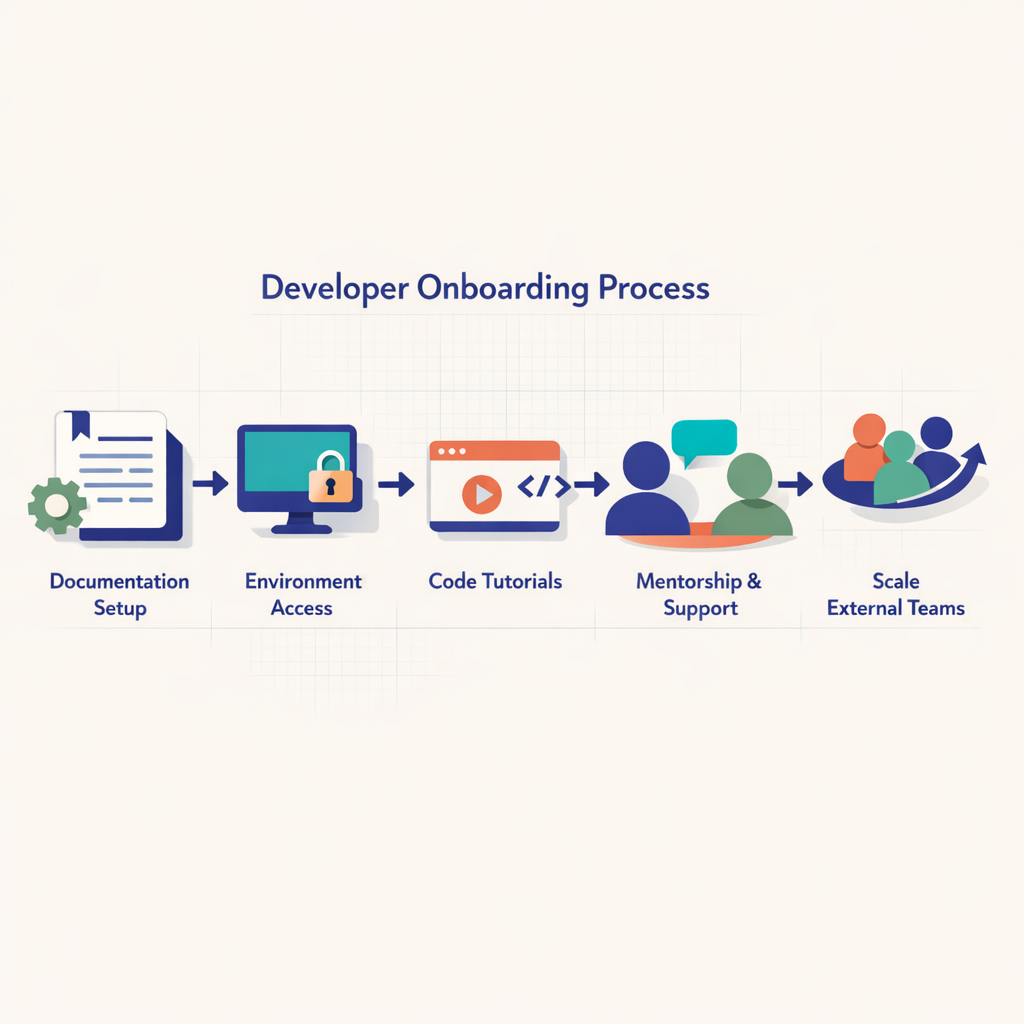 Graphical representation of the developer onboarding process shown as sequential steps
Developer onboarding is a critical phase that connects the hiring of external developers with their full integration into the team and codebase. This process equips newcomers with the necessary understanding of the codebase, policies, and organizational culture, facilitating their transition into productive team members.
Integrating external teams offers numerous benefits, such as an expanded talent pool and increased productivity. However, onboarding outsourced developers presents unique challenges. Beyond the obvious language barriers and time-zone differences, developers often struggle to adapt to the codebase, maintain security, and comply with project standards.
An effective onboarding process begins with proper documentation setup. Developers need context to gain a comprehensive understanding of the codebase they will be working on, including the code's functionality, usage, and the problems it aims to solve. Well-structured documentation minimizes the need for constant question-and-answer sessions, thereby improving onboarding efficiency.
A project's environment setup is integral to onboarding external developers. It ensures they have a "ready-to-run" setup, detailing every step from source code retrieval and required software to configurations and running the project locally.
Consistency in code writing is critical as new developers are integrated into the team. Establishing clear code standards and protocols that all developers must follow fosters better collaboration and facilitates easier code maintenance.
Implementing appropriate access controls and strong security measures is a fundamental aspect of developer onboarding. Developers should receive permissions tailored to the parts of the codebase for which they will be responsible, while adhering to best security practices.
Effective communication is essential for external developers. Integrating them into existing communication workflows or creating new ones that cater to their needs significantly enhances collaboration.
Concrete ramp-up strategies are vital for helping external developers quickly become productive, thus reducing the time needed to reach full productivity. Additionally, it’s important to avoid common onboarding pitfalls, such as overwhelming new developers with too much information or leaving them feeling isolated.
As your project grows, you may need to expand your external team. Consequently, a robust and scalable developer onboarding process is crucial to accommodate these expansions seamlessly.
Integrating external or outsourced developers into your existing codebase requires a well-structured approach. Defining this process accurately streamlines the onboarding workflow and ensures a smoother transition. Here's a detailed step-by-step breakdown.
Engaging with external sources presents a unique set of challenges. In addition to language barriers and time-zone differences, issues such as adapting to the existing codebase environment, maintaining code standards, and ensuring stringent accessibility and security are paramount. Addressing these concerns is essential to prevent disruptions in productivity and project timelines.
Effective onboarding begins with thorough documentation. Context is crucial for developers; it helps them understand the code's purpose, architecture, application, and the problems it seeks to address.
Establishing the project environment is equally critical. External developers must have access to a 'ready-to-run' project setup that includes:
This systematic setup allows external developers to gain a better understanding of the project framework, fostering independence during the initial run and establishing a solid foundation for seamless collaboration.
Enforcing code standards is a vital step in integrating outsourced developers. Agreeing upon and adhering to a defined code style ensures uniformity throughout the project's code structure.
Grant carefully controlled access to external developers. Prevent unauthorized access and potential security breaches by implementing restrictions. This strategy secures project and company information while maintaining developer productivity.
Establishing effective communication workflows is essential for the onboarding process. Regularly engage with external developers and provide feedback to avoid miscommunication.
Implement practical ramp-up strategies for developers. Gradually increasing the workload and complexity of tasks allows them to acclimatize more quickly to your codebase.
Frequent onboarding mistakes include inadequate documentation, hastily assigning complex tasks, and providing insufficient feedback. Avoid these pitfalls to facilitate a smoother transition period.
When expanding externally integrated teams, ensure arrangements for ongoing support and upgrades while carefully managing risks and project quality.
In conclusion, integrating external or outsourced developers is a complex process. However, with careful consideration and meticulous planning, the onboarding experience can be streamlined and productive for all parties involved.
To initiate effective codebase onboarding and outsourced developer integration, prioritize the creation of detailed and comprehensive documentation. Documentation provides necessary context for new developers, helping them understand the structure and usage of the codebase, as well as the problems it aims to solve. By investing time and effort into thorough documentation, you lay the groundwork for effective integration of your external team.
Effective documentation serves as a roadmap for your external developers, offering insights into your codebase's organization and functions. It has the dual advantage of:
While establishing documentation for your codebase, ensure it includes the following elements:
Remember, documentation should be a dynamic aspect of your project. Whenever changes or updates occur, ensure that your documentation reflects those adjustments. By adhering to this guideline, you will facilitate smoother integration of outsourced developers and external teams.
Consistently revisit and revise your documentation; it is not a one-time task. The fresher your documentation remains, the easier it will be for developers to understand your codebase and contribute effectively. The ultimate goal is to equip your external developers with the knowledge to understand your codebase and get them up and running as quickly as possible.
A robust environment setup is crucial for effective codebase onboarding and outsourced developer integration. Developers should be equipped to hit the ground running with a 'ready-to-run' project setup.
Begin by preparing an elaborate guide detailing each step involved in setting up the project environment. Be sure to include:
A detailed guide will help eliminate ambiguities that often cause setup-stage bottlenecks. Additionally, it significantly decreases reliance on internal team members, allowing them to focus on their core tasks.
Depending on project requirements and the size of your external team, provide access to various environments:
Maintaining separate environments is fundamental to ensuring high-quality code deliverability and preventing potentially buggy features from being released into the live system.
External developers need to grasp the build and deployment process of your codebase. This understanding enables them to test their code in real-world conditions, ensuring compatibility with your existing application framework.
Provide detailed instructions for building the software from the source code and deploying it. Address specifics related to deployment tools, scripts, and schedules, keeping developers informed about the current state of the project.
In conclusion, investing time in effective environment preparation creates a strong foundation for integrating external developers. Avoid common mistakes like providing incomplete information or unclear instructions; these simple errors can lead to confusion and wasted time. As you scale external teams, maintaining a robust environment setup and clear instructions will be essential for ensuring productivity and adhering to delivery timelines. Remember, the objective is to equip developers with all the tools they need to start contributing as soon as possible.
Onboarding external developers into an existing codebase can present several hurdles. The challenges associated with onboarding range from adapting to the project environment and ensuring compliance with coding standards to managing access control and security, as well as establishing effective communication workflows. In this section, we discuss potential strategies to address these issues and enhance the efficiency of your onboarding processes.
The importance of robust documentation as a foundation for successful developer onboarding cannot be overstated. To facilitate a smoother onboarding experience, ensure that your documentation:
Establishing and maintaining coding standards is essential for effective developer onboarding. These standards provide a framework for the development process, enhance readability, and simplify debugging. Therefore, it is crucial to:
Ensuring adequate access control and security during the onboarding process is vital to protecting the integrity of your codebase. To this end, consider the following security measures:
Establishing clear communication channels between internal and external team members is essential for a smooth project transition and execution. Consider the following steps:
The key to successful codebase onboarding and external team integration lies in a well-structured and efficient onboarding process. Avoid the common mistake of pressuring new developers to deliver results too soon. Instead, prioritize building a sustainable onboarding framework that is supported by comprehensive documentation, unified code standards, clear communication norms, and strategic ramp-up strategies. By proactively addressing these factors, you can effectively mitigate onboarding challenges and successfully scale your external teams.
Successful project completion doesn't conclude with the onboarding phase; rather, it advances into the effective scaling and management of external teams. This process requires the seamless integration of outsourced developers into the company’s workflows, systems, and processes, enabling them to adapt to your codebase efficiently. Scaling an external team and ensuring smooth integration necessitates a well-structured strategy. The goal is to create a cohesive unit where both internal and external team members collaborate effectively, working together to deliver the project on time and within budget.
As your team expands, your initial onboarding process may require modifications. To accommodate a larger pool of developers, consider the following adjustments:
Effective scaling hinges on the creation of robust documentation. Review and verify all code comments and external documentation for clarity, completeness, and current relevance. Both internal and external developers should be able to onboard and understand the system with minimal assistance.
Promote adherence to development guidelines and workflows. The established code standards that guided the original onboarding process should persist as a priority. Additionally, remain vigilant for any deviations, addressing them promptly.
As you scale, security and access measures must also be enhanced. Security protocols should align with the increased team size. A good starting point is to ensure that two-factor authentication and other protective measures are implemented.
Efficient communication is critical for the smooth operation of any team, particularly one that includes outsourced developers. Keep communication channels open and encourage regular use. Regularly scheduled meetings are essential for keeping everyone informed about project developments and on track.
New team members require a well-organized ramp-up strategy to quickly boost their productivity. This process should encompass mentorship programs, pair programming sessions, and ongoing feedback.
As you expand your team and integrate developers from diverse backgrounds, be mindful of common pitfalls, such as:
Adhering to these guidelines will ensure effective onboarding of external developers and smooth integration of external teams. Ultimately, this approach helps maintain the development team's productivity, thereby facilitating successful project completion.
 Conceptual image of a scale balancing individual and team code blocks symbolizing the management and scaling of external teams
As we reflect on the critical aspects of onboarding external teams, it is important to emphasize the significance of each step in ensuring a smooth integration process for outsourced developers. From the initial stages of documentation setup to the final phases of scaling external teams, every element plays a vital role in achieving successful integration and an effective codebase onboarding process.
It's essential to acknowledge the real challenges involved. Introducing the external team to your codebase, organizational culture, communication workflows, and upholding quality and security standards can indeed be overwhelming. However, a carefully crafted onboarding plan anticipates these challenges and proposes proactive solutions to engage developers effectively.
Comprehensive and well-articulated documentation is non-negotiable. Providing context and clearly explaining the functionality, usage, structure, and problems addressed by the codebase can significantly minimize the time spent on inquiries, thereby enhancing onboarding efficiency. Remember, the value of your codebase is directly proportional to the quality of the documentation that supports it.
The initial environment setup for your project is crucial during the onboarding process. Offering a detailed, ready-to-run configuration is a significant step forward. This approach not only reduces the time required for setup but also ensures developers can hit the ground running.
Aligning the external team with your coding standards, granting them managed access, and safeguarding your codebase are essential to maintaining project integrity. A well-defined strategy for communicating these standards, along with regular checks, can help uphold consistency and ensure secure systems.
Effective communication is fundamental to teamwork, and it becomes even more critical when onboarding and integrating an external team. Always establish clear lines of communication; this will encourage team members to ask questions, seek clarification, and promptly report challenges.
Finally, it is important to recognize that even the most effective onboarding process requires ongoing iteration and improvement. You may need to reassess ramp-up strategies and scaling processes periodically, based on project complexity and team productivity.
While the onboarding process can be challenging, with the right tools and strategies, it is possible to seamlessly integrate external teams and achieve project success. In conclusion, developer onboarding is not merely about getting external developers up to speed with the existing codebase; it encompasses effective collaboration, clear communication, adherence to standards, security assurance, and scaling processes that collectively lead to efficient project delivery.
In this blog post, we have explored how to navigate the onboarding process. Keep in mind that every organization and project may differ, and thus, your approach to onboarding should be tailored accordingly. Continually iterate on your process, integrating lessons learned along the way for a streamlined integration. Remember, successful developer onboarding is not a destination but a journey of continuous improvement.