S
Sagar HebbalePublished on April 15, 2026
22 min read
What Does an AI Automation Agency Do? Insights & Services Explained
Explore the services, benefits, and implementation of AI Automation Agencies in today's business landscape.
Explore the services, benefits, and implementation of AI Automation Agencies in today's business landscape.
Hero image depicting an AI Automation Agency
In today's rapidly evolving digital landscape, the significance of Artificial Intelligence (AI) and automation is undeniable. AI, a technology that enables machines to replicate human intelligence, has fundamentally transformed the technological sphere. Similarly, automation—vital for minimizing human intervention, increasing productivity, and accelerating processing speeds—plays a crucial role. When these two groundbreaking technologies converge within the framework of an AI Automation Agency, we see remarkable synergy.
An AI Automation Agency represents the integration of AI and automation, providing essential solutions that define the future of business. These agencies develop complex algorithms and strategies that leverage AI technologies, including machine learning, natural language processing, and robotics, to facilitate digital transformation. As passionate pioneers in the digital realm, they navigate uncharted territories, making the seemingly impossible achievable. Fundamentally, AI Automation Agencies are instrumental in shaping the ever-evolving AI landscape.
AI Automation Agencies deliver a wide range of services, which include:
To grasp the real-world impact of these services, consider the finance sector, where fraud prevention is a significant concern. AI automation agencies implement highly effective solutions to detect and address such anomalies. The healthcare sector also benefits, as advancements in AI enable more efficient patient monitoring and diagnosis.
It is important to recognize that successfully implementing and maximizing the potential of this technology hinges on a deep understanding of what an AI Automation Agency truly represents—an organization dedicated to automating processes using AI technology. It's not merely about boosting productivity; it's about reshaping the future of businesses and fostering innovation.
While adopting and integrating AI automation can seem overwhelming, the decision between working with an AI automation agency and building an in-house system is critical. By dispelling common misconceptions and navigating practical scenarios, an AI automation agency can guide businesses in embracing AI-driven processes.
An AI Automation Agency is a powerhouse that amplifies operational efficiency and optimizes business processes. By combining advanced technologies such as AI and automation, these agencies are uniquely equipped to offer transformative solutions—this is the essence of the AI Automation Definition. At their core, their mission is to minimize human involvement in processes and thereby push productivity to its peak.
These dynamic agencies provide a comprehensive array of AI Automation Services. This includes offering strategic consultations that shape business goals and deploying AI to enhance the speed and accuracy of everyday tasks. They are skilled in developing sophisticated machine learning algorithms and enabling systems to understand, interpret, and generate human language using Natural Language Processing (NLP).
AI Automation Agencies have a wide scope of application. With their capacity to devise intelligent solutions, they play vital roles in sectors like finance, where they implement fraud detection systems, and in healthcare, where they improve patient monitoring. The meaning of an Automation Agency lies in its ability to guide businesses toward a smarter future.
When discussing the 'Build vs Agency' dilemma, it's crucial to note that developing in-house solutions can be resource- and time-intensive. An agency offers expertise without the ongoing costs of maintaining a full-time team.
Consequently, an AI automation agency is not just focused on technology integration; it is also about propelling businesses into their next phase of technological excellence while streamlining operations. This marks a revolution in how we manage and optimize business processes.
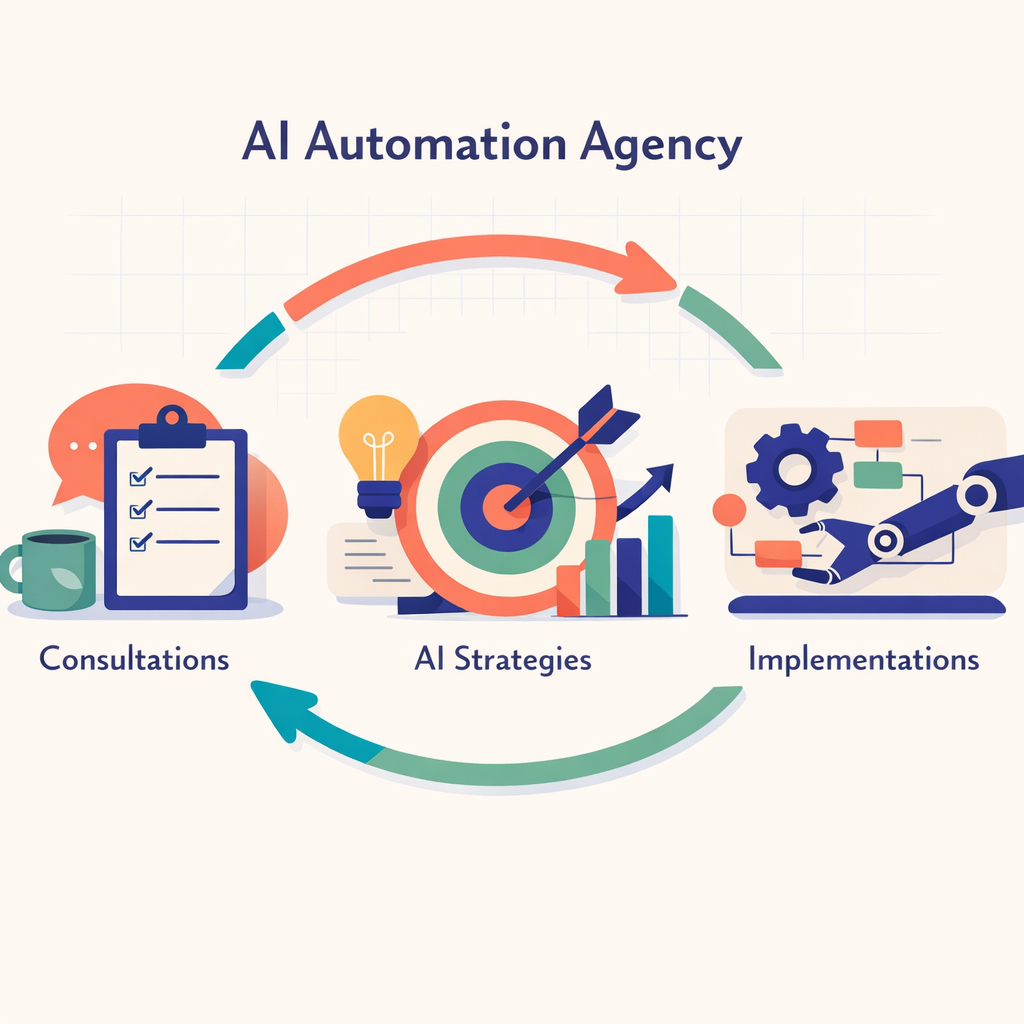 Diagram of core services of an AI Automation Agency
Understanding the offerings of an AI Automation Agency is crucial for businesses aiming to integrate AI into their operations. Here, we outline the core services provided.
A consultation with an AI Automation Agency serves as an enlightening dialogue. The experts within these agencies possess a profound understanding of AI automation, its definitions, and its functionalities. They collaborate closely with businesses to assess how AI and automation technologies can be effectively integrated into their workflows.
The consultation process involves:
After acquiring a comprehensive understanding of a business’s requirements during consultations, the next key service is the formation of an AI strategy. This includes:
Grasping the significance of the automation agency and its role in AI strategy formation is essential for a company's successful digital transformation.
The development and implementation of AI and automation solutions are fundamental components of an AI Automation Agency’s services. The professionals within these agencies not only develop AI software but also educate the workforce on how to operate it effectively.
Key steps in this process include:
This service focuses on creating intelligent systems by utilizing machine learning (ML) algorithms and Natural Language Processing (NLP) capabilities. ML allows AI systems to learn from data, while NLP enables these systems to understand, interpret, and generate human language.
Through these offerings, an AI Automation Agency empowers businesses to automate complex tasks both efficiently and intelligently.
In summary, AI Automation Agencies provide a wide range of services, from consultation to the implementation of technologies that streamline business workflows and enhance operational efficiency.
Artificial Intelligence (AI) and automation are already transforming various sectors, with their application scope continually broadening. Let’s explore some of the most impactful AI automation use cases, which provide a practical understanding of our AI automation definition and highlight the significance of Automation Agencies.
AI and automation have begun to play a crucial role in the financial sector. A prominent example of their effectiveness is in fraud detection. AI automation services can analyze vast datasets, identifying irregular transactions that may indicate fraudulent activities.
By utilizing machine learning algorithms, an AI Automation Agency can analyze customer behavior patterns under various conditions. Any anomalies detected are flagged, alerting security systems to potential threats.
The healthcare sector is another area where the transformative impact of AI automation is evident. Agencies have developed AI-driven solutions for advanced patient monitoring, which streamline medical processes, optimize the allocation of healthcare resources, and ultimately enhance patient outcomes.
Unlike human counterparts, who may struggle with constant monitoring due to fatigue or other limitations, these solutions can consistently and accurately track patients' health metrics. Furthermore, they can detect subtle changes in a patient’s health status, allowing for earlier intervention and improved healthcare results.
As e-commerce continues to dominate, AI automation services are revolutionizing online retail experiences. AI-driven solutions can personalize the customer experience by analyzing past shopping preferences and recommending products accordingly.
In this sector, AI and automation are increasingly employed for:
In manufacturing, AI automation has proven to be superior to conventional methods in terms of productivity and efficiency. From predictive maintenance to quality control, AI automation agencies are implementing a variety of solutions that significantly improve operational efficiency while minimizing human intervention in numerous processes.
In summary, AI automation services have shown remarkable potential across various sectors by achieving business-specific objectives more efficiently. The AI automation use cases mentioned above merely scratch the surface of this dynamic landscape. More businesses are now choosing to partner with AI Automation Agencies, recognizing their ability to streamline processes, reduce human error, and leverage data effectively.
The proverb, "Well begun is half done," perfectly captures the approach of an AI Automation Agency when implementing AI and automation solutions in a business context. The implementation process employed by these agencies is thoughtfully crafted to consider the unique needs and operational complexities of each business. To fully appreciate this process, it is essential to clarify the definition of AI Automation and understand the practical meaning of an Automation Agency.
The journey begins with a thorough understanding of the business's operational dynamics, followed by the formulation of a comprehensive AI strategy. This strategy ensures that the objectives of the AI automation services align seamlessly with the broader vision of the business.
After defining the strategy, the AI Automation Agency focuses on identifying specific use cases where AI and automation can deliver tangible benefits. Following this, the agency’s experts develop customized AI solutions tailored to these identified needs.
After the solution architecture is completed, a pilot run is conducted to assess the performance of the developed solution, allowing for the identification and rectification of any bugs or inefficiencies. The feedback obtained from this phase is vital for fine-tuning the solution.
Once the solution has been fine-tuned and rigorously tested, it is deployed for operational use. However, the role of the AI Automation Agency does not end with deployment. Ongoing assessment and improvement are crucial to ensure the solution remains effective over the long term.
Given the distinctiveness of each business, creating a personalized roadmap for the AI implementation process is essential. By leveraging AI automation services, businesses can achieve enhanced efficiency, streamlined workflows, and improved decision-making capabilities, provided that this roadmap is carefully crafted and diligently followed.
In summary, the implementation process of an AI Automation Agency is not a one-size-fits-all approach; rather, it is a customized path that aligns with the specific requirements and goals of the business. Therefore, understanding the definitions of AI Automation and Automation Agency is crucial to fully harness the potential of these transformative technologies.
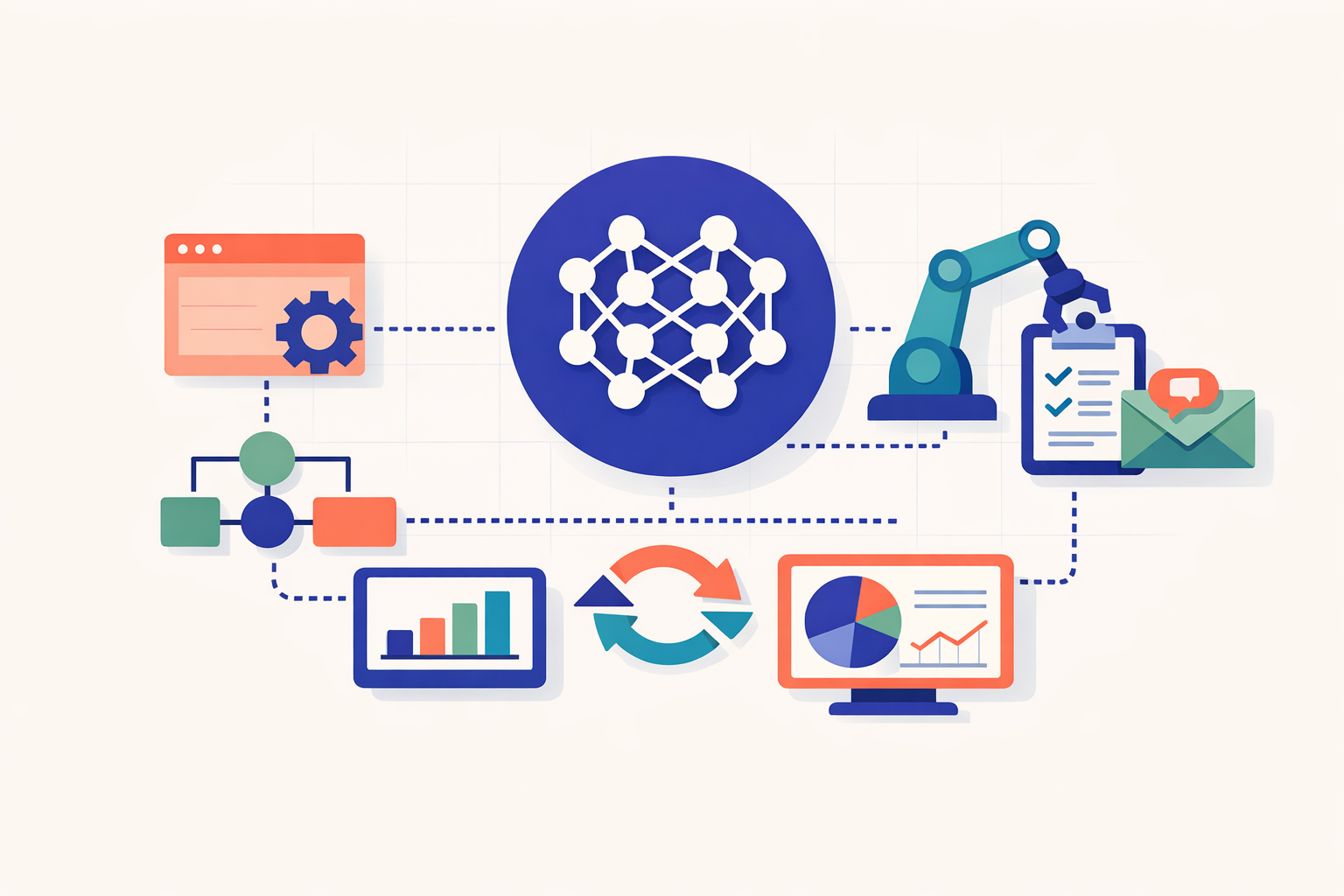
An AI Automation Agency operates at the intersection of Artificial Intelligence (AI) and automation, leveraging a variety of AI automation tools to create transformative solutions that minimize human intervention and optimize processes. The foundation of these solutions relies on the integration of advanced technologies, primarily machine learning, natural language processing (NLP), and robotics.
Machine learning is a central AI automation tool utilized by agencies to develop sophisticated algorithms. These algorithms enable systems to learn from experience and utilize this experiential data to make informed decisions, enhancing the AI automation services these agencies provide. For instance, in the finance sector, machine learning models are used to accurately predict and identify fraudulent transactions.
Another essential AI automation tool is NLP, which helps systems understand, interpret, and generate human language. This capability makes interactions with AI-powered systems more human-like. Consider a virtual assistant responding to customer inquiries in real-time or software that converts spoken language into text; both exemplify the effective application of NLP in action.
Robotics, the third pillar of this technological trio, introduces the concept of physical automation. It merges AI and machine learning to perform complex tasks, ranging from assembling components in manufacturing to assisting in surgical procedures in the healthcare sector. This highlights the essence of automation agencies: achieving efficiency and precision through advanced technologies.
Understanding the role and benefits of an AI Automation Agency is essential for harnessing the power of today's rapidly evolving technological landscape.
In conclusion, machine learning, NLP, and robotics are not merely tools; they are catalysts driving businesses towards a future where efficiency, accuracy, and speed are not just desirable outcomes but fundamental characteristics of a well-structured system. Leading this transformative journey are AI Automation Agencies, which provide the necessary expertise and technological solutions.
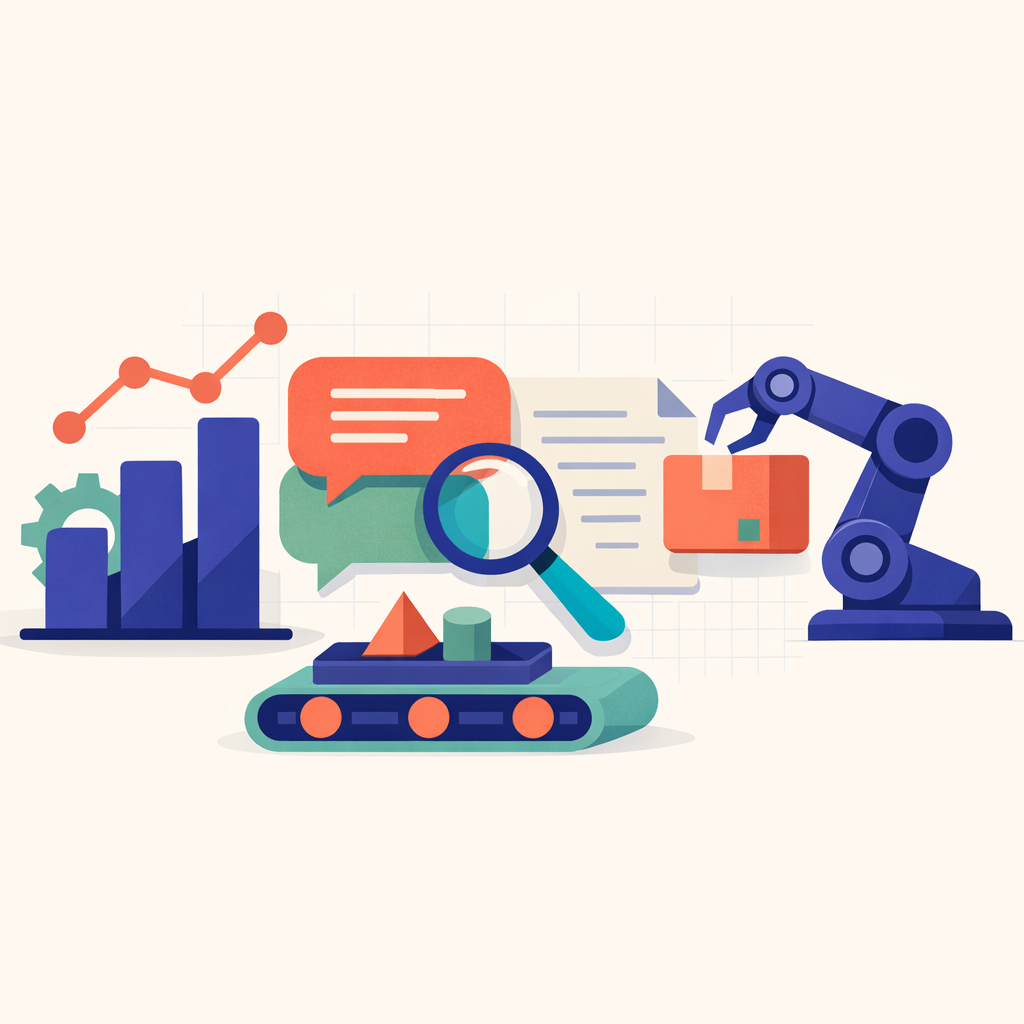 Illustration depicting AI Automation tools and technologies
Partnering with an AI Automation Agency offers a wide range of benefits that go beyond mere operational efficiency and streamlined processes. Let's explore both the tangible and intangible advantages these services present to businesses of all sizes and sectors.
One of the most significant advantages of AI Automation Services is enhanced efficiency. By minimizing the need for manual intervention in repetitive tasks, AI automation allows valuable human resources to concentrate on more complex and strategic objectives.
Furthermore, automation enhances productivity by significantly reducing the turnaround time for a variety of tasks.
AI automation is engineered for precision. By implementing these advanced technologies, businesses can experience a remarkable reduction in error rates. The essence of AI Automation is the decreased reliance on human involvement in various processes, which in turn minimizes the likelihood of human-induced errors.
The services provided by AI Automation Agencies leverage the power of AI to revolutionize decision-making. By integrating machine learning models into their processes, organizations can make more informed, data-driven decisions that take into account a broader range of factors.
AI Automation should be viewed not as an expense but as a strategic investment. The services provided by Automation Agencies can lead to significant long-term cost savings by:
Utilizing AI Automation services gives businesses a distinct competitive edge. These technologies enable seamless customer interactions, predictive analysis, and trend forecasting, which are invaluable for developing strategic plans that stay ahead of competitors.
The significance of an Automation Agency extends far beyond simple AI implementation; it includes the myriad benefits that come from adopting these services. Embracing the offerings of an AI Automation Agency can enhance efficiency, accuracy, predictive capabilities, and cost savings, ultimately transforming a business's position in the global marketplace.
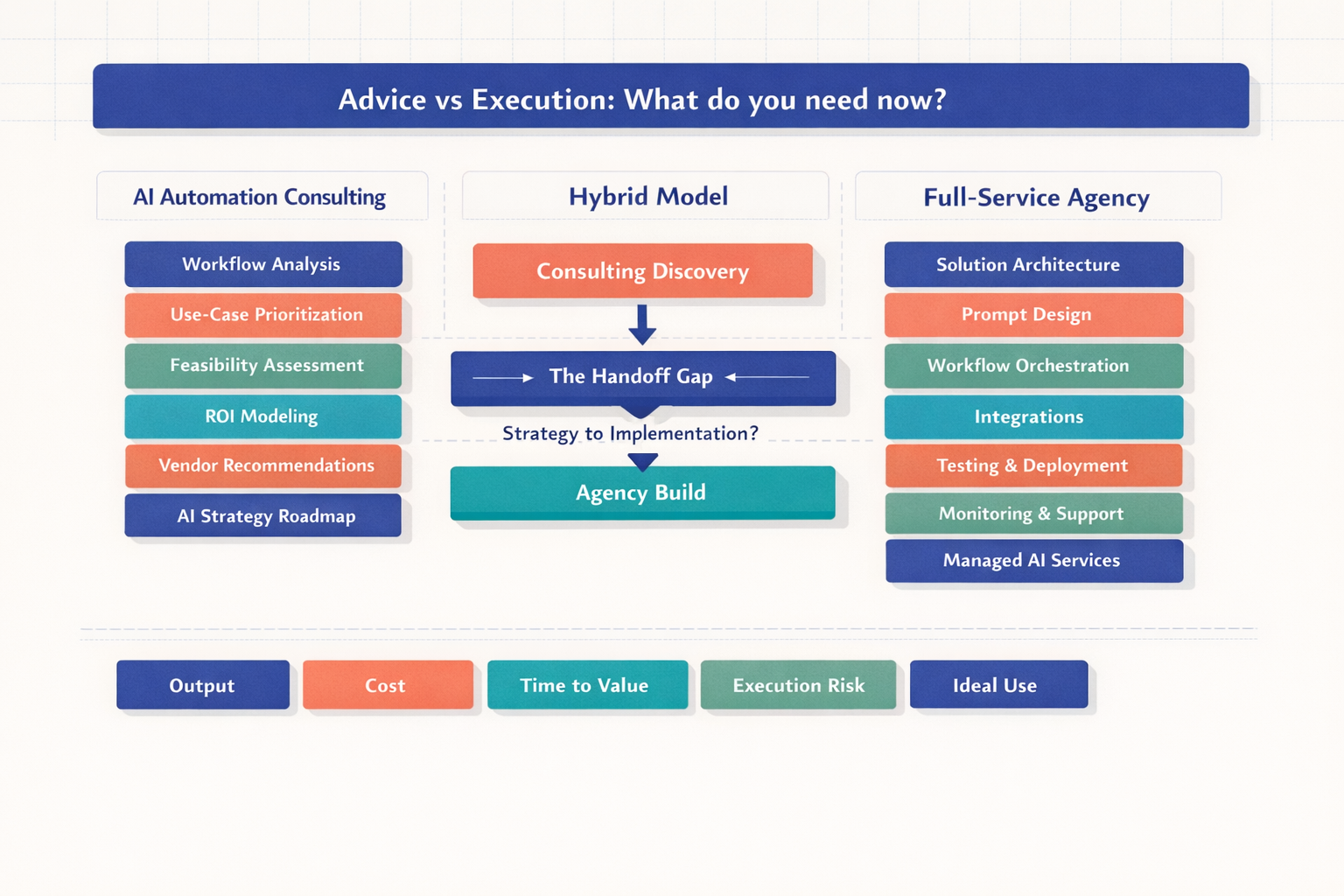
Deciding between developing an in-house AI solution versus collaborating with an AI Automation Agency requires careful consideration and a comprehensive understanding of the fundamental differences each option presents.
The foundation of effective AI implementation is rooted in both technical and industry-specific expertise.
While an in-house team may possess the necessary technical skills to implement AI solutions, they often lack the deep industry knowledge that an AI Automation Agency can provide. Agencies have the advantage of deploying solutions across various sectors, gaining valuable experience and insights that can significantly enhance the implementation process.
From strategizing AI integration aligned with business goals to crafting sophisticated machine learning algorithms, these agencies offer comprehensive AI Automation Services designed to drive transformative outcomes.
AI solutions require iterative testing, scaling, and optimization. While an in-house team may be capable of managing this process, it can be slower and more error-prone due to a lack of scalability expertise.
Conversely, an AI Automation Agency is equipped with established procedures and resources to quickly scale AI solutions, ensuring efficiency and productivity. Their focus extends beyond merely defining and implementing AI strategies; they also develop user-friendly tools and applications that seamlessly integrate with existing systems.
In-house teams often divide their attention among various projects, which can dilute their focus on AI development. In contrast, AI Automation Agencies dedicate their full resources to perfecting AI solutions, staying at the forefront of technological trends to provide state-of-the-art offerings.
In light of the comparative analysis above, it's clear that the decision greatly depends on individual business needs. While in-house capabilities may suit businesses pursuing small-scale implementations or those with very niche requirements, an AI Automation Agency is better equipped for organizations seeking extensive, scalable, and efficient AI solutions.
Common misconceptions include the beliefs that in-house builds are always more cost-effective or that agencies may be disconnected from business goals. Ultimately, these factors are highly dependent on each unique circumstance. The decision should be informed by a thorough understanding of one's own business needs and available resources.
When it comes to AI Automation Agencies, several misconceptions cloud the true potential and effectiveness of AI automated services. Let us address and debunk some of these common myths.
Fact: It's essential to view an AI Automation Agency as a valuable investment, promising significant ROI in the long run. While the initial costs may appear high, the overall financial benefits derived from increased efficiency, faster processes, and reduced human errors far outweigh these expenses. This perspective is particularly supported by small and medium-sized enterprises (SMEs) that have experienced remarkable growth after partnering with an AI automation agency.
Fact: Although AI automation may seem daunting at first glance, a core function of an Automation Agency is to simplify this complexity and provide tailored solutions that meet each business's unique needs. The agency’s support extends beyond implementation; they also offer ongoing guidance to ensure seamless integration and comprehension of the tools and technologies employed.
Fact: This perception is misguided; AI Automation acts as an enabler rather than a replacement. It primarily focuses on automating repetitive tasks, allowing human resources to concentrate on more critical and strategic aspects of the business that require human intelligence and nuanced judgment. Consequently, AI augments human capabilities rather than eliminating them.
Fact: While AI automation does lessen the need for human oversight in routine tasks, it does not entirely eliminate the necessity for human involvement. Regular updates, maintenance, and adjustments to address evolving business requirements are crucial. Moreover, the expertise and insights of the AI Automation Agency are often essential in these scenarios.
In the rapidly evolving world of technology, the significance of an AI Automation Agency cannot be overstated. From streamlining financial operations to enhancing healthcare services, the transformative power of AI automation has a profound impact across various industry sectors. In this section, we explore several real-world scenarios where businesses have experienced substantial improvements by leveraging AI Automation Services.
In finance and banking, speed, accuracy, and security are paramount. By embracing the transformative potential of AI Automation Agencies, these sectors have significantly enhanced their operations. They have effectively employed AI to:
Through the implementation of AI automation, financial institutions have reduced redundant tasks, improved customer experiences, and strengthened security measures.
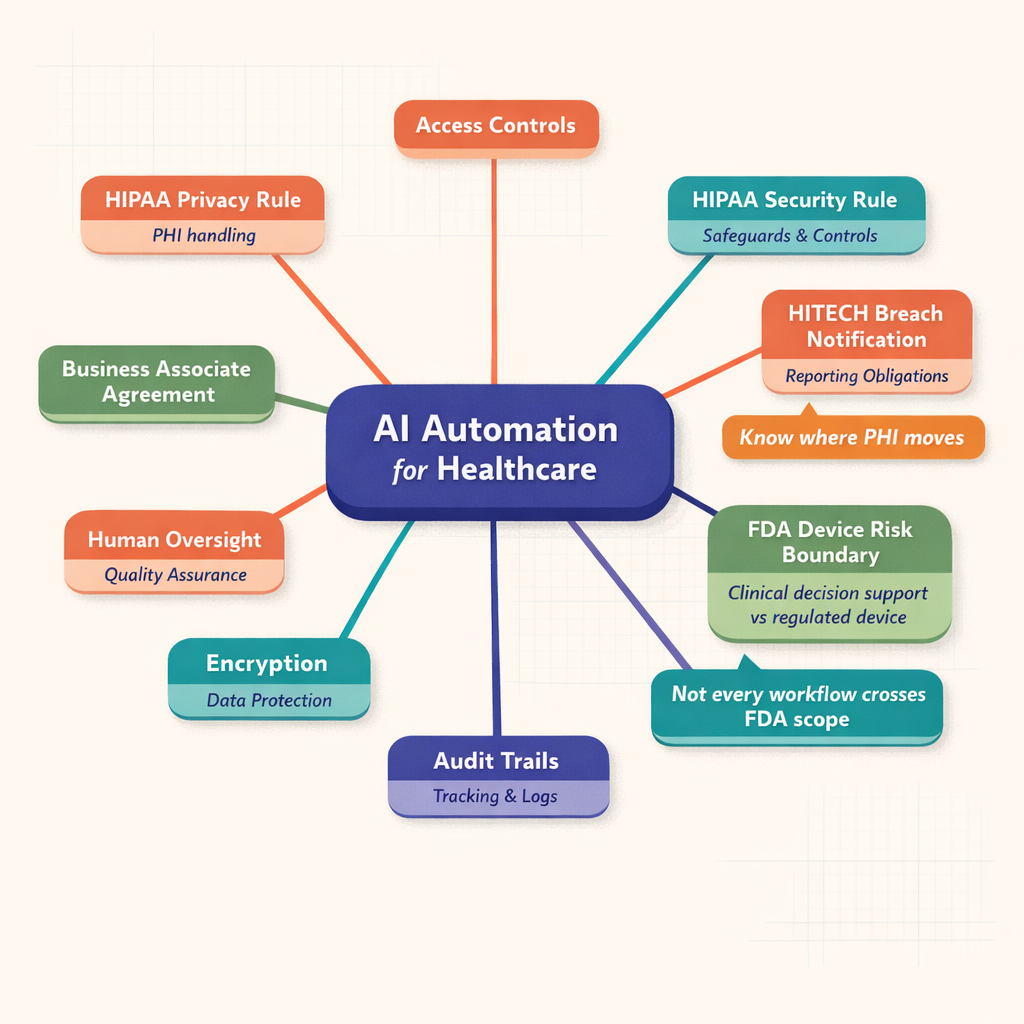
In the healthcare industry, AI automation has initiated a paradigm shift. For example, patient monitoring systems have been revolutionized, as AI-powered technologies provide real-time updates and identify potential health risks. Doctors receive instantaneous notifications, enabling swift actions that improve patient outcomes and alleviate the burden on healthcare providers.
The transition to Industry 4.0, characterized by smart factories and automated supply chains, is accelerated by AI Automation Agencies. These agencies implement cutting-edge AI solutions for:
As a result, companies are experiencing minimized downtime, reduced costs, and improved productivity.
In the retail sector, AI automation has created novel opportunities for hyper-personalized shopping experiences. With innovations such as AI-powered chatbots and automated inventory management systems, retail businesses can deliver superior customer experiences while maintaining efficient operations.
In summary, the AI Automation Agency serves as a catalyst for growth, innovation, and process optimization across multiple verticals. It defines a new wave of technology adoption, ensuring companies not only keep pace with advancements but also capitalize on them. Whether in finance, healthcare, manufacturing, logistics, retail, or any other sector, the extensive benefits of AI automation are invaluable.
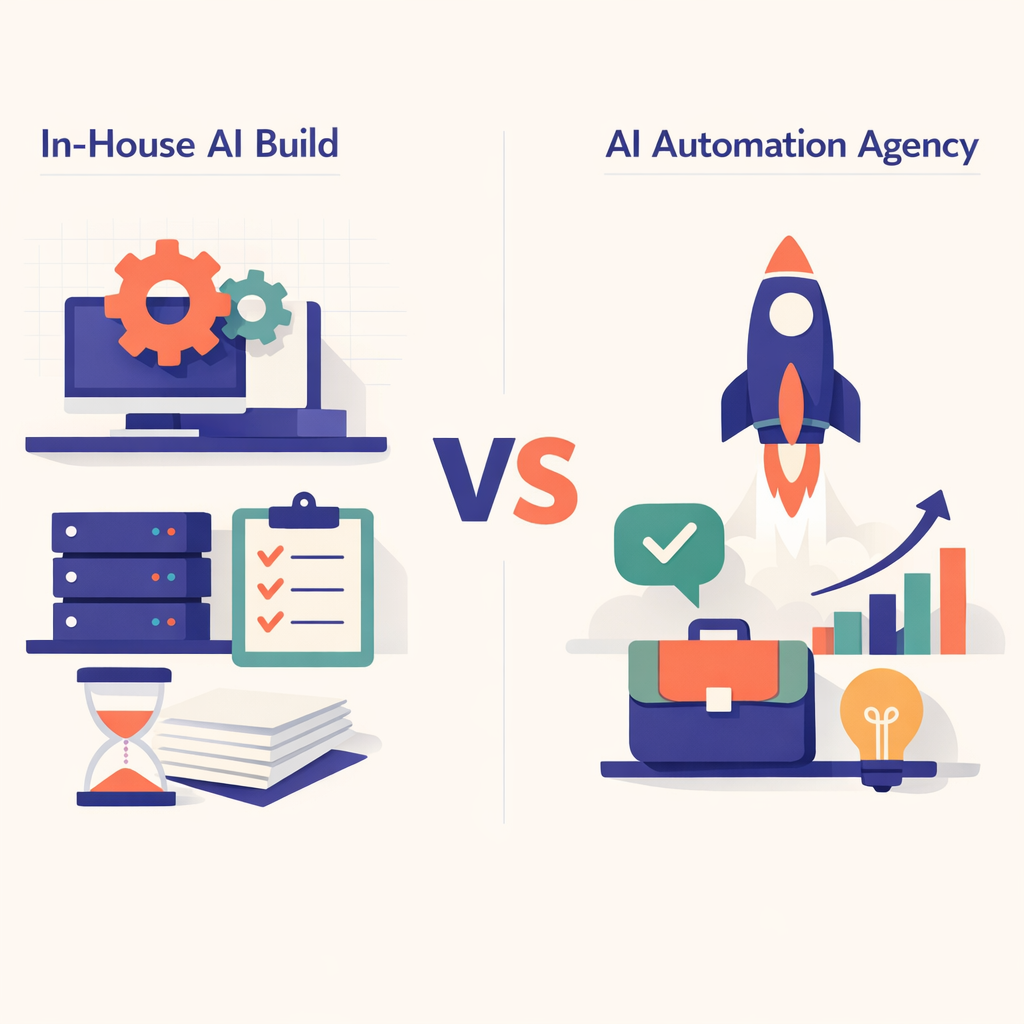 Illustration comparing an in-house AI build and an AI Automation Agency
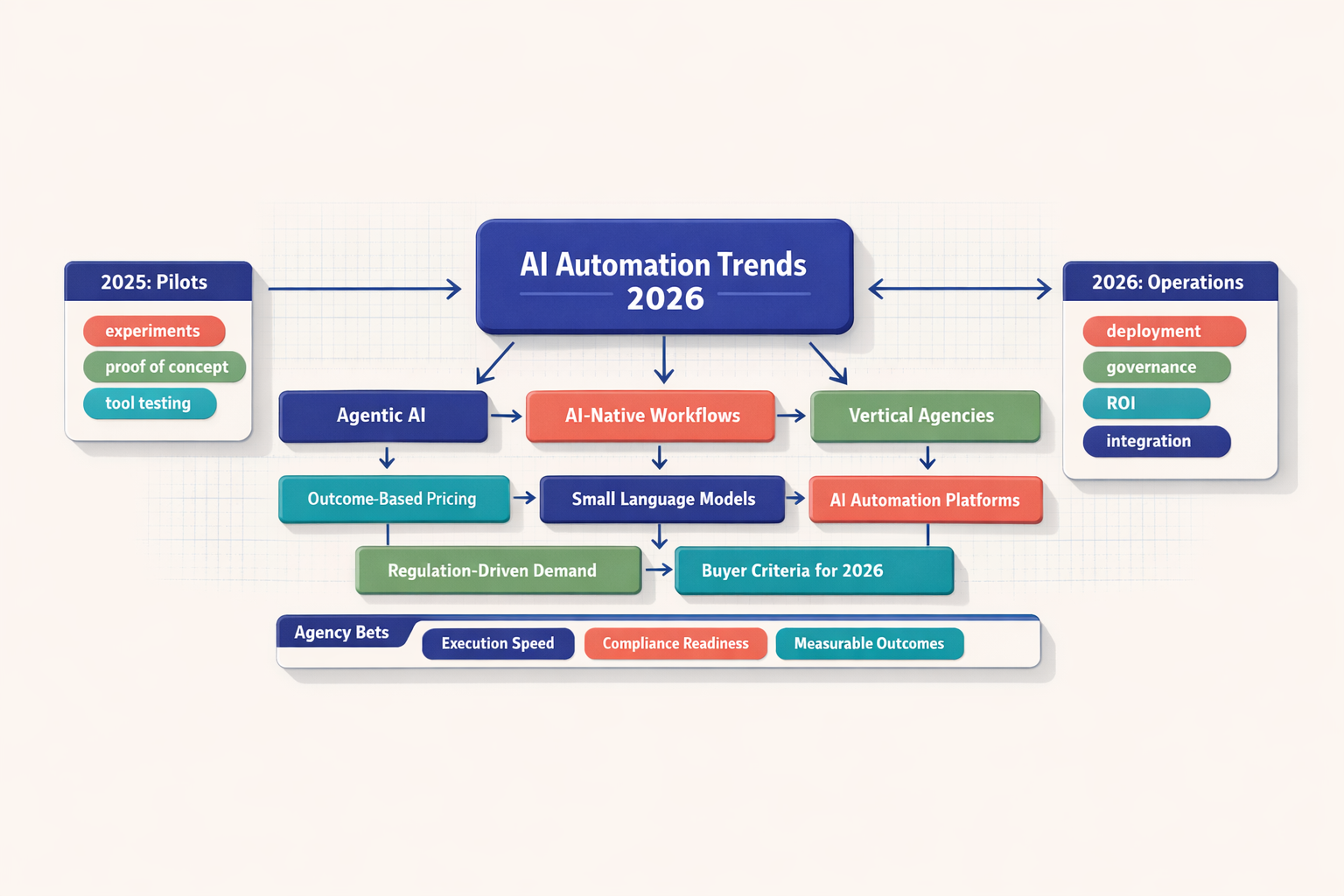
The landscape of technology is a fast-paced and ever-evolving realm; within this dynamic horizon, the emergence of AI Automation Agencies has become a pivotal development. As defined by the concept of AI Automation, these agencies integrate Artificial Intelligence with advanced automation tools to propel businesses and enterprises into the future, enhancing their dynamism and efficiency.
Let's explore the potential growth and the areas in which AI Automation Agencies could exert significant influence:
| Aspect | Details |
|---|---|
| Potential Growth | As more companies recognize the advantages that AI automation provides, the demand for specialized AI Automation Agencies is poised to surge. Indeed, projections suggest that by 2035, AI could enhance profitability rates by 38% across various business sectors. |
| Influence in Areas | While traditional sectors such as finance and healthcare are currently capitalizing on the benefits, emerging fields like virtual reality and personalized marketing are increasingly calling for the transformative power of AI automation. |
At its core, the concept of an Automation Agency centers around facilitating a smooth transition to AI-driven operations, thereby significantly enhancing business functions.
In retrospect, the journey of AI Automation Agencies is just beginning. Given the rapid pace of technological advancement, the delivery of AI Automation services will continue to evolve, instigating a paradigm shift in operational procedures. Judging by their impact thus far, these agencies promise to lead us toward a future where technology serves not only as a tool but as a strategic partner in achieving business objectives.
In conclusion, as we navigate the exciting future of AI Automation, one thing is clear—its trajectory is destined to ascend, with AI Automation Agencies positioned at the forefront of this transformative era.