A
Ankit Kumar BaralPublished on April 15, 2026
16 min read
How to Write a Software Requirements Document Template: A Complete Guide
Master the art of drafting an SRD with our practical template and best practices.
Master the art of drafting an SRD with our practical template and best practices.
Blog title with a stylized representation of a software requirements document
Building a software product is akin to constructing a skyscraper. Before any groundbreaking occurs, architects create detailed blueprints to effectively communicate requirements to builders. In the world of software development, the Software Requirements Document (SRD) serves as this essential blueprint, laying the groundwork for a successful software project.
The software requirements document template establishes a clear understanding of what the software product is expected to achieve, facilitating seamless communication between the customer and the software development team. A well-crafted SRD functions as a comprehensive guide to:
It meticulously enumerates critical aspects such as software interfaces, functionalities, performance levels, design constraints, and quality attributes, alongside project schedules, milestones, deadlines, and dependencies. This thoroughness fosters clarity, eliminating ambiguity and paving the way for an optimal software product.
Keep in mind, an SRD is more than just a document; it is a powerful tool capable of minimizing project risks through efficient management of software changes.
In summary, the significance of a software requirements document cannot be overstated. It acts as a guiding light, transforming ideas into reality and creating tangible value for businesses. Embrace the precision and clarity that an SRD brings to your software development lifecycle, and watch your project gain confidence and direction.
In the following sections, we will delve into the effective writing of a software requirements document, ensuring it appeals to both technical and non-technical stakeholders. We will provide an actionable roadmap that is easy to understand and follow, emphasizing the importance and utility of a software requirements document throughout the process.
Ready to learn more? Embrace the blueprint to success. Before we begin this journey, we encourage you to visit our custom software development services for an enriched perspective on the process. For further insights into the software development landscape.
Are you ready to discuss your next software project? Feel free to get in touch with us.
: The SRD is a document that outlines the functionality, interfaces, performance, design, constraints, and required resources for a software system.
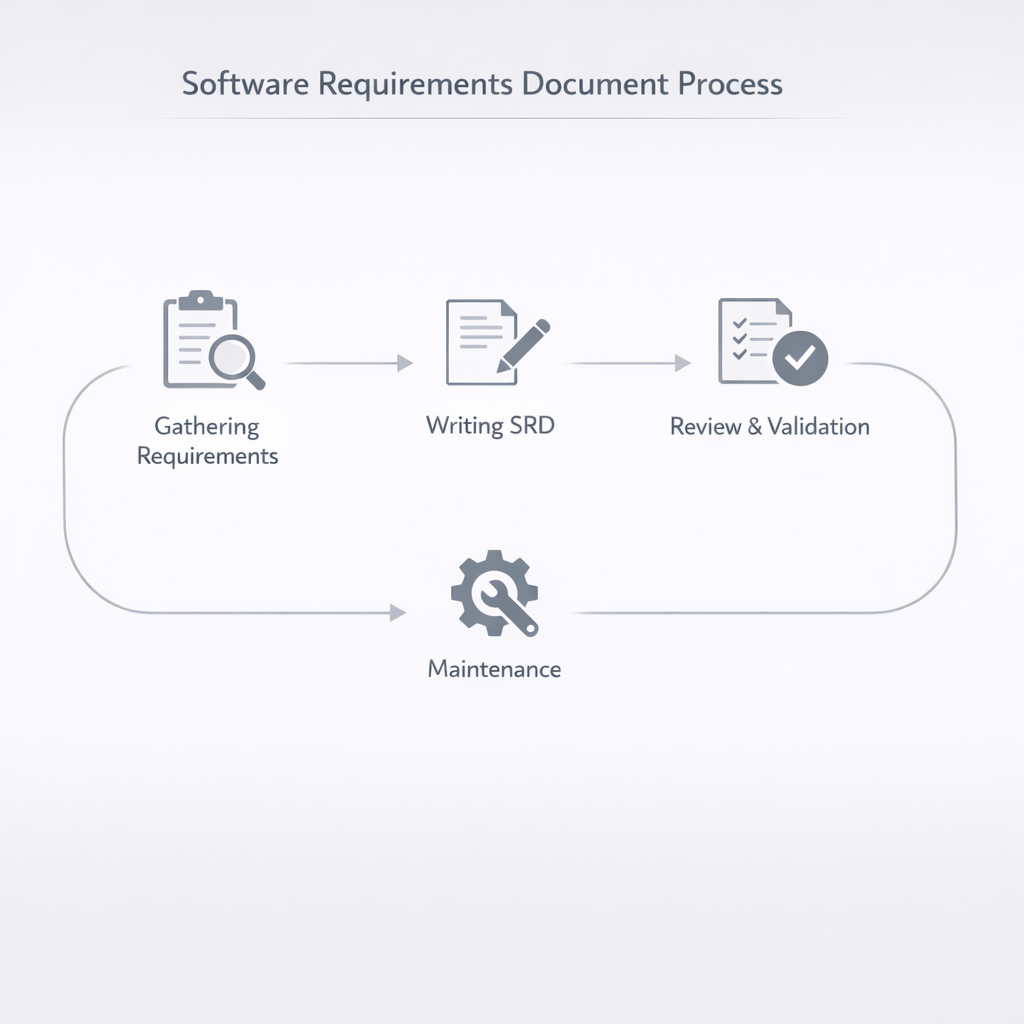 Diagram illustrating the stages of creating a software requirements document
Whether you are a business leader, product manager, or software developer, the Software Requirements Document (SRD) is an essential tool that should not be overlooked. This vital document, often referred to as a software requirements specification, outlines the key parameters of the project and serves as the blueprint that guides the entire software development process.
The SRD serves multiple purposes. Its primary function is to facilitate communication among stakeholders, including customers, management teams, and developers. By meticulously defining the software requirements, the SRD helps prevent misunderstandings and ensures that everyone is aligned.
Additionally, the SRD establishes a baseline agreement between customers and suppliers. It articulates the expected functionalities of the software product while delineating the project's boundaries and expectations.
Beyond its roles in communication and agreement, the SRD also acts as a benchmark for measuring project success. Since it documents the objectives that the software should achieve, the SRD can be utilized to evaluate whether these objectives have been met.
Let’s explore the components that comprise the SRD:
| Elements | Description |
|---|---|
| Purpose | Outlines the objectives of the software product, including general functions, user needs, and constraints. |
| Overview | Provides a succinct summary of the product, covering features, operational context, and dependencies. |
| Detailed Description | Delivers specifics on software interfaces, functionalities, performance, user interactions, and quality attributes, including design constraints. |
| Schedules | Lists project milestones, deadlines, and critical dependencies to align the development team and manage expectations. |
| Resources | Identifies essential tools, technologies, personnel, and resources required for the project. |
Writing a comprehensive SRD may initially seem daunting, but breaking it down into manageable steps can help create a complete and structured document, paving the way for a smoother software development journey. For more insights on writing an SRD, you can refer to our custom software development process.
Remember, a well-structured and detailed SRD ensures the success of a software project by bridging communication gaps and managing expectations. Use these tips and our practical SRD template to draft your own software requirements document effectively.
In the complex realm of software development, recognizing the significance of a comprehensive Software Requirements Document (SRD) is essential. A well-crafted SRD serves as a clear, shared vision that encourages contributions and feedback from all stakeholders, effectively minimizing ambiguity and misunderstandings, ultimately paving the way for a successful product.
An exemplary SRD, often referred to as a software requirements specification, provides a single source of truth—it succinctly and accurately delineates the expected functionalities of the software product. This document serves as the benchmark against which software behavior is evaluated, ensuring that any alterations to project expectations are systematically incorporated, thus maintaining consistency throughout the development process.
The process of drafting an SRD creates an opportunity for all stakeholders to thoroughly understand one another's perspectives. It plays a crucial role in aligning:
This alignment fosters a collaborative environment, reducing the likelihood of misunderstandings and ensuring that all team members feel acknowledged and valued.
Upon finishing the development phase, an SRD acts as a vital reference point for stakeholders to verify whether the developed software fulfills all specified requirements.
Another critical function of an SRD is in risk management. By establishing clear, mutually agreed-upon standards, it anticipates and addresses potential issues, limitations, and uncertainties that may arise during the project lifecycle.
Ultimately, a comprehensive Software Requirements Document is indispensable for the overall success of a software project. It provides explicit guidance on writing software requirements, accompanied by an SRD template to ensure a uniform framework. This significantly enhances the likelihood of project approval and eventual success.
Our custom software development process post, along with Post 19 and Post 15, offers additional insights into creating detailed software requirements.
In a rapidly changing tech landscape, developing a comprehensive Software Requirements Document is non-negotiable. It serves as the backbone of any software development project, ensuring a solid foundation for success from the very beginning. Need assistance in crafting an impeccable SRD? Don’t hesitate to get in touch with us.
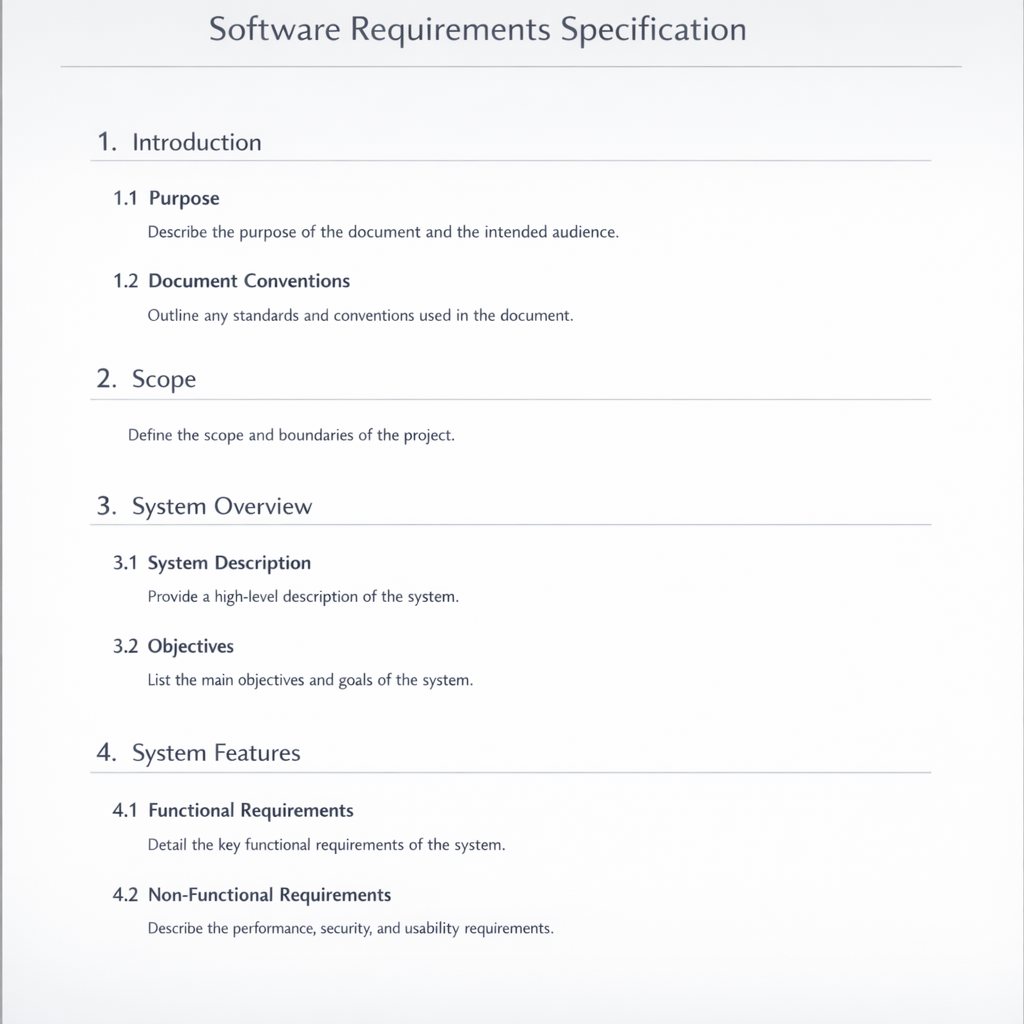 Example structure of a Software Requirements Document
Writing a Software Requirements Document (SRD), also referred to as a software requirements specification, does not need to be an intimidating endeavor. Begin by familiarizing yourself with the fundamentals of writing software requirements, and then follow our structured step-by-step guide. By breaking the process down into manageable segments, clarity and precision are achieved. Utilize our practical SRD template as a valuable resource throughout this journey.
This guide is rooted in industry best practices and is tailored for business leaders, product managers, and software developers alike. For a deeper understanding of the context and syntax integral to a comprehensive SRD, it is strongly recommended to reference both Post 19 and Post 15.
Let’s explore the steps involved in crafting an exemplary Software Requirements Document:
Purpose: Clearly articulate the purpose of your software product. Describe its functions, user needs, and constraints succinctly. This section serves as the mission statement of your SRD.
Purpose [Identify the software you are creating. Define user needs and product functionality: what is the product going to do?]
Overview: Provide a comprehensive overview of the product, acting as a summary of what will follow in the document. This section aids stakeholders in grasping the full scope of the project.
Overview [Give a brief overview of the product to help readers achieve a basic understanding of the offering.]
Detailed Description: In this section, outline the software's interfaces, functionalities, performance metrics, design constraints, and quality attributes. The more accurate and thorough this section is, the more streamlined the software development process will be.
Detailed Description [Outline interfaces, functionalities, performance criteria, design constraints, and quality attributes.]
Schedules: Share project schedules by marking key milestones, deadlines, and critical project dependencies. Establishing timelines fosters focus and minimizes resource waste.
Schedules [Identify significant milestones and deadlines, and list critical project dependencies.]
Resources: Detail the tools, technologies, and personnel necessary to bring the product to completion. This section delineates the logistical aspects of the project.
Resources [Identify the required tools, specific technologies, and personnel needed.]
If you require additional support with this process, consider partnering with experts. Our custom software development service may be the assistance you need.
Additionally, if you seek further clarification or guidance, please reach out to us. Our team is always available to support you through every step of the process.
As promised, let's explore our software requirements document template to deepen your understanding of how to effectively write software requirements. For complete context, please refer to our previously discussed concepts; Post 19 and Post 15 serve as excellent resources for additional background information. Whether you're seeking a refresher on the steps involved or the importance of an effective Software Requirements Document (SRD), these posts have you covered.
The core sections of our SRD template are:
Introduction
System Overview
System Features and Requirements
Project Management
Quality Assurance
And so on, providing detailed information for the remaining sections of the software requirements document template based on the specific needs of the "TaskMaster Pro" software.
Collaborating with strategic planning, this comprehensive software requirements document template serves to streamline the development process, acting as a singular source of truth for all stakeholders and facilitating the creation of a robust and functional end product.
In search of tailored development solutions? Visit our custom software development page or reach out to us directly to ensure your software projects are initiated with strong, reliable foundations.
Creating an effective software requirements document (SRD) template demands meticulous attention to detail and a thorough understanding of the essential elements that contribute to its informativeness and functionality. Below are several best practices to consider when developing your SRD template.
Ensure that your software requirements specification is clear and comprehensible. Avoid ambiguous language and select terms that your team and stakeholders can easily understand.
Maintaining consistency throughout your SRD template is critical. Ensure that all sections of the document are uniform in terms of format, style, terminology, and units of measurement. Inconsistencies can lead to misunderstandings and miscommunications.
Every requirement in your software requirements document template must be testable. It should be specific enough to enable the creation of test cases that confirm whether the requirement has been met. If a requirement is not verifiable, it becomes challenging to determine if the product meets the specified criteria.
Design your SRD template for easy modification. This flexibility is essential, as software requirements often evolve throughout the project's lifecycle. The structure of your SRD should facilitate seamless updates while preventing unintended consequences from these changes.
Avoid the use of colloquial expressions, jargon, or terminologies that may allow for varied interpretations. Instead, strive for a standardized language that is universally understood by all stakeholders involved.
Requirements are bound to change as the project progresses. Regularly update your document to incorporate these changes, ensuring it consistently reflects the current state of project requirements.
Engage all stakeholders when developing your SRD template. Their insights can significantly enhance the quality of your software requirements specification and reduce the likelihood of overlooked or misunderstood requirements.
By implementing these best practices, you will ensure that your software requirements document template serves as an effective tool for communicating project expectations and managing software changes.
Ready to get started with your software requirements specification? Contact our team now to embark on the journey to a streamlined software development process!
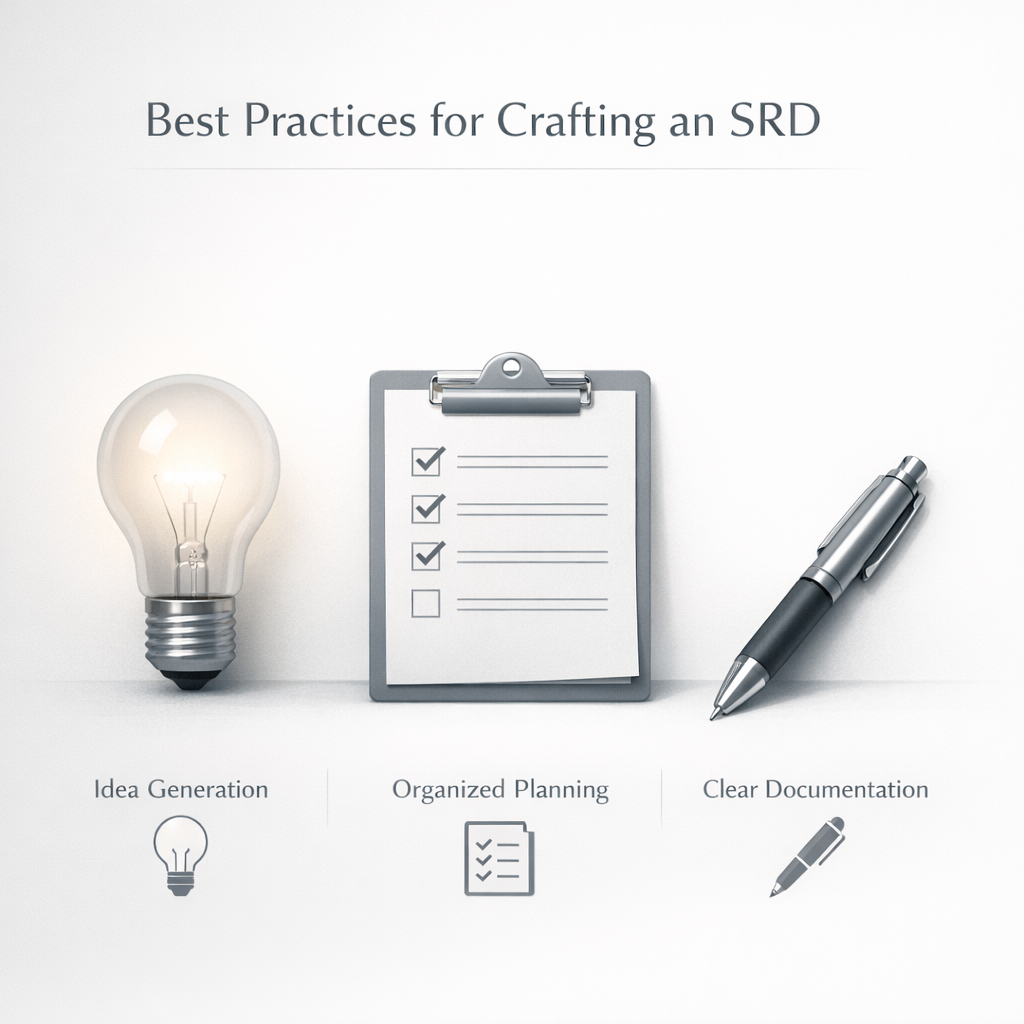 Conceptual representation of best practices when creating a Software Requirements Document
The journey toward a successful software product begins with the creation of a comprehensive software requirements document (SRD). This essential artifact, sometimes referred to as the software requirements specification, serves as the foundation of your project by explicitly outlining expectations and deliverables.
A well-crafted SRD fosters a mutual understanding between stakeholders, clarifying the intended outcomes of the software product. Furthermore, an effective SRD helps to manage software changes, thereby reducing potential project risks.
While the task of writing an SRD may initially seem daunting, it can be distilled into a series of manageable steps. For additional context, you may want to refer to our post on custom software development. To initiate the development of an SRD, keep the following steps in mind:
| Step | Description |
|---|---|
| Define | The Purpose of your product |
| Provide | A comprehensive Overview |
| Write | A Detailed Description |
| Identify | Schedules |
| Denote | Resources |
If you need assistance with getting started, please contact our team for further insight and support.